
10 Best Diversity and Inclusion Practices for Tech Companies in Poland (2026)
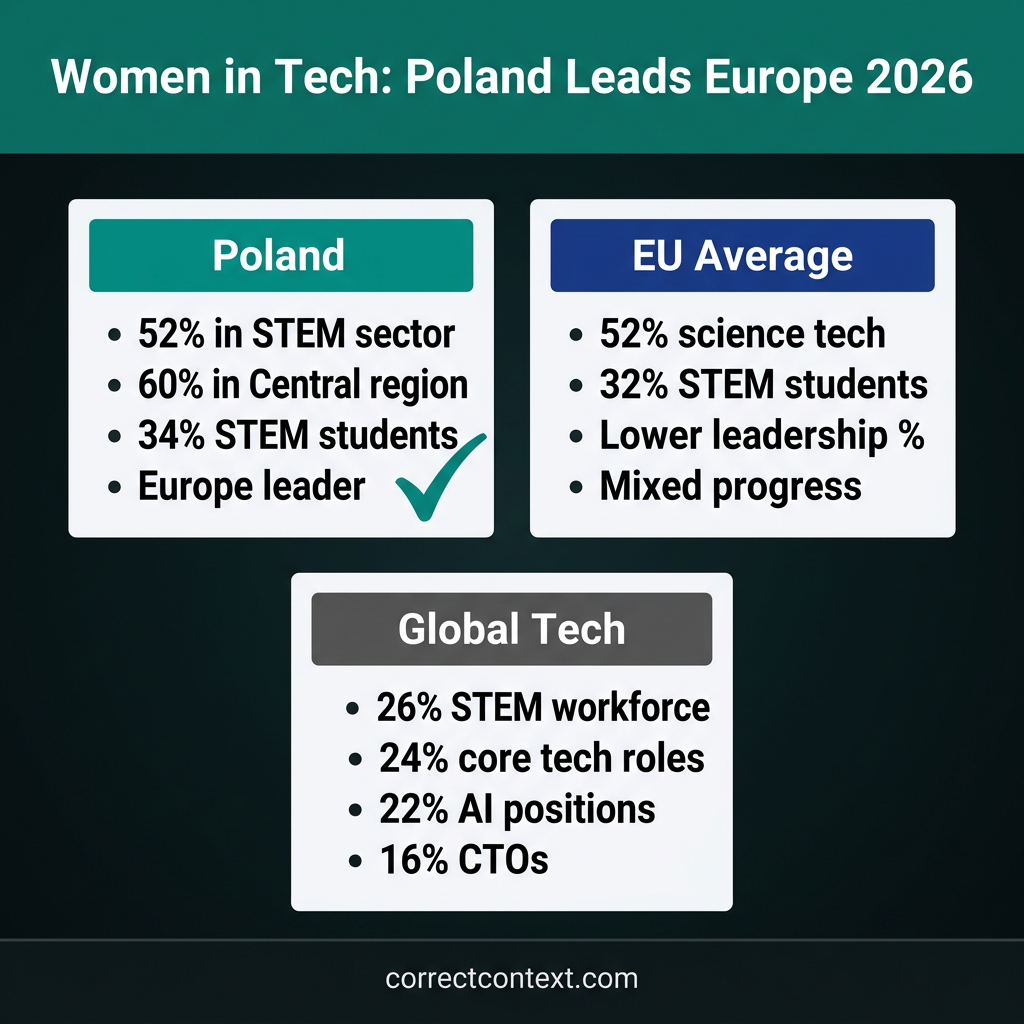
Poland leads Europe in female representation in science and technology, with 52% of the STEM workforce being women—compared to the EU average of 52% overall but with Poland’s central macro region hitting 60.59%. Yet here’s the paradox: despite this strong entry-level representation, women hold only 16% of CTO positions globally and face a “broken rung” at the first promotion to management. In 2026, diversity and inclusion (D&I) isn’t just a moral imperative—it’s a business necessity. Companies in the top quartile for ethnic and gender diversity are 35% more likely to outperform their peers financially, according to McKinsey’s latest research.
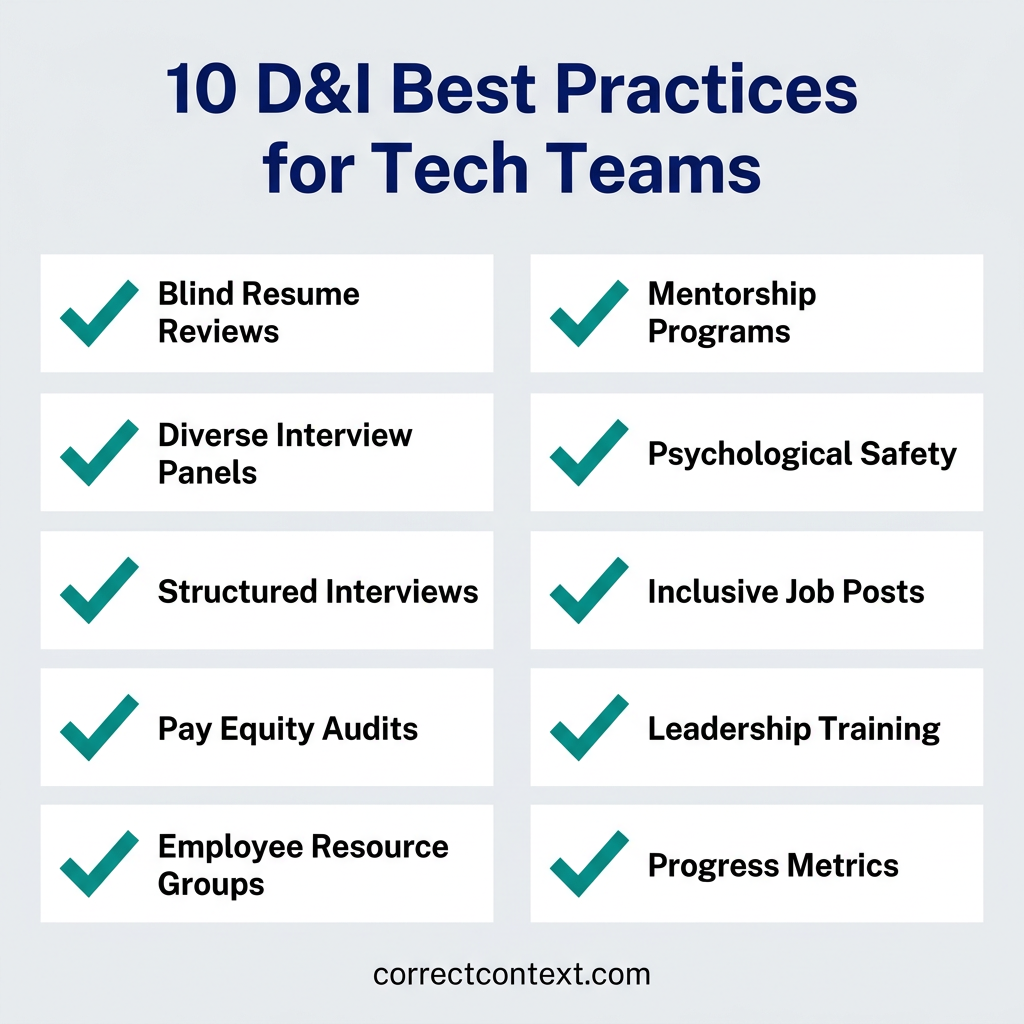
This article delivers ten evidence-based D&I practices specifically tailored for tech companies operating in Poland and the CEE region. Whether you’re a startup founder building your first engineering team or an established firm scaling to 100+ developers, these practices will help you attract diverse talent, build inclusive cultures, and drive measurable business results.
The Business Case for Diversity in Tech: Why 2026 Is Different
Before diving into the practices, let’s establish why D&I matters now more than ever. The data is unambiguous:
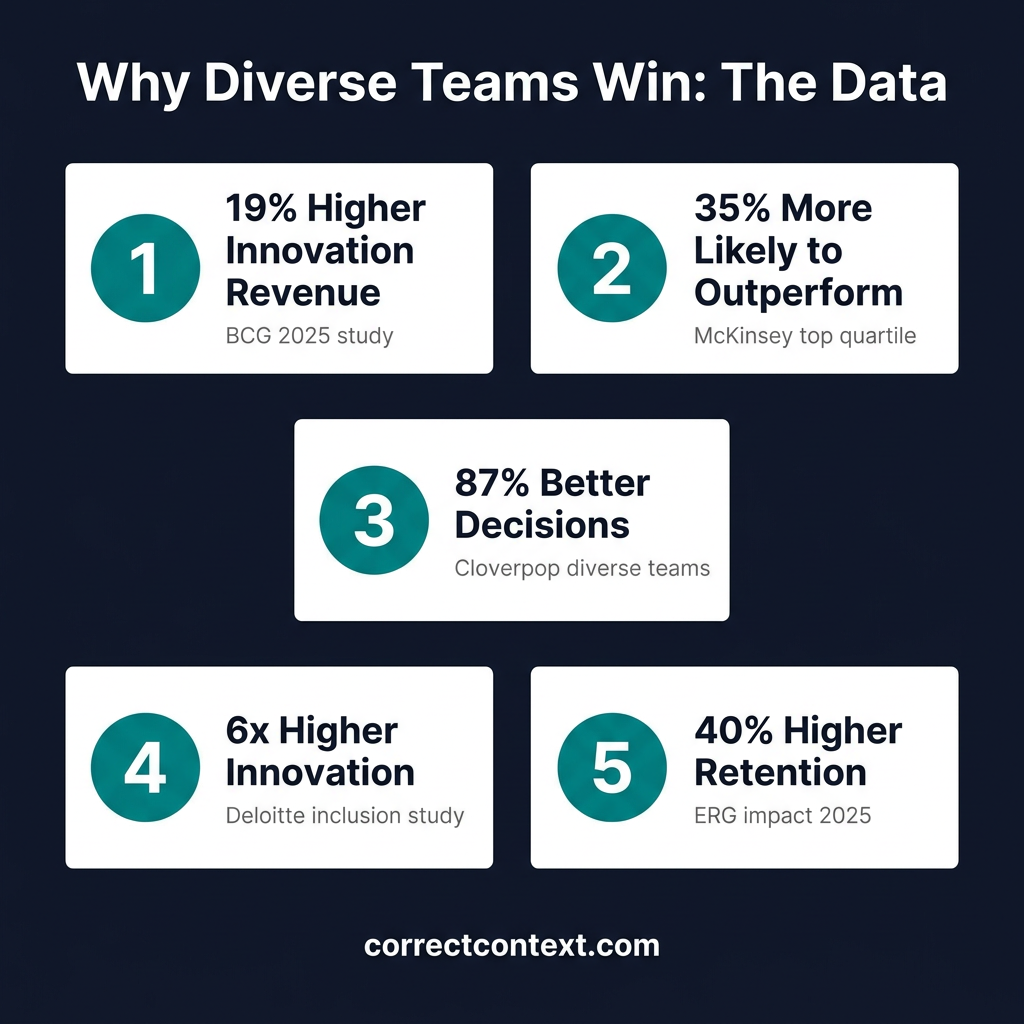
- 19% higher innovation revenue: Boston Consulting Group found that companies with above-average diversity on management teams reported 19% higher innovation revenue than those with below-average diversity.
- 35% more likely to outperform: McKinsey’s 2025 research shows companies in the top quartile for ethnic and racial diversity are 35% more likely to have financial returns above their industry median.
- 87% better decision-making: Cloverpop’s analysis of 600 business decisions found that diverse teams made better decisions 87% of the time compared to individual decision-makers.
- 6x higher innovation: Deloitte’s inclusion study linked inclusive cultures to 6x higher employee innovation, 2x higher engagement, and 8x better business outcomes.
But here’s what makes 2026 different: the business case has shifted from correlation to causation. We now understand the mechanisms—psychological safety, diverse perspectives, reduced groupthink—that make diverse teams perform better. And we have playbooks for building them.
Poland’s Unique Position
Poland presents a fascinating case study. According to Polish Economic Institute research based on Eurostat data, three Polish macro regions exceed 58% female representation in science and technology:
- Central macro region (Łódź and Świętokrzyskie): 60.59%
- Eastern macro region (Podlasie, Lublin, Podkarpackie): 59.70%
- Northern macro region (Kuyavian-Pomeranian, Pomeranian, Warmian-Masurian): 59.58%
This legacy stems from communist-era policies that encouraged women into engineering and provided childcare support. However, the “broken rung” phenomenon persists: while women enter tech at strong rates, they face disproportionate barriers at the first promotion to management. Fixing this requires intentional intervention.
Practice 1: Implement Blind Resume Reviews
Unconscious bias starts at the very first touchpoint: resume screening. Studies consistently show that identical resumes with male names receive more callbacks than those with female names. Blind recruitment removes this barrier.
How It Works
Blind resume review anonymizes applications by removing:
- Names (which signal gender and ethnicity)
- Photos
- Age indicators (graduation dates)
- Address information that signals socioeconomic status
The Evidence
Google saw a 5% increase in female hires after implementing blind resume reviews combined with diverse interview panels and structured assessments. By 2025, 50% of organizations are expected to use blind hiring, growing 10% annually.
Implementation for Polish Tech Companies
- Use technology: Tools like MeVitae and other AI-powered screening platforms can automate anonymization.
- Train recruiters: Ensure your HR team understands why blind review matters and how to evaluate skills objectively.
- Monitor results: Track pass-through rates by demographic before and after implementation to measure impact.
Practice 2: Build Diverse Interview Panels
A candidate’s assessment changes based on who interviews them. All-male panels signal—consciously or not—that the company doesn’t value diverse perspectives. Mixed panels produce fairer evaluations.
The Data
Research from the Journal of Organizational Behavior shows that diverse interview panels:
- Reduce individual interviewer bias through accountability
- Ask broader questions that reveal candidate capabilities
- Create a more welcoming experience for underrepresented candidates
Implementation Guide
| Panel Composition | Best For | Why It Works |
|---|---|---|
| 2 technical + 1 HR + 1 from underrepresented group | Senior roles | Balanced skill and culture assessment |
| 1 hiring manager + 1 peer + 1 cross-functional | Mid-level roles | Diverse perspective on collaboration |
| 1 senior + 1 peer + 1 junior team member | All levels | Tests communication across levels |
For Polish companies, this means actively involving the women already on your team in interview processes. Given Poland’s strong female representation in STEM education, you likely have qualified women who can participate.
Practice 3: Standardize Interview Questions
Unstructured interviews are breeding grounds for bias. When interviewers wing it, they gravitate toward candidates who remind them of themselves. Structured interviews—asking every candidate the same questions in the same order—level the playing field.
The Research
Google’s Project Oxygen found that structured interviews were one of the strongest predictors of hiring success. When combined with scoring rubrics, they:
- Increase predictive validity by 26%
- Reduce bias by forcing evaluators to focus on job-relevant criteria
- Create documentation for fair comparison between candidates
Building Your Question Bank
For software engineering roles, structure your interview around:
- Technical competency: Standardized coding problems or system design scenarios
- Problem-solving: Behavioral questions about past challenges (e.g., “Tell me about a time you had to debug a production issue under pressure”)
- Collaboration: Questions about working with difficult team members or cross-functional stakeholders
- Culture add: What unique perspective would you bring to our team?
Score each response on a 1-5 scale immediately after the interview, before discussion with other interviewers.
Practice 4: Conduct Regular Pay Equity Audits
The gender pay gap in tech persists even when controlling for role, experience, and performance. In 2026, women in STEM earn 87-90 cents per dollar compared to men, with the gap widening to 13% in science roles. Pay equity audits identify and correct these disparities.
Global Trends
75% of companies now conduct annual pay equity audits, up from 45% in 2019. This isn’t just about compliance—it’s about retention. 61% of women in tech report being paid less than male peers in similar roles, and this perception drives turnover.
Audit Process
- Group employees by role, level, and performance rating
- Analyze compensation (base salary + bonuses + equity) by gender and ethnicity within each group
- Identify outliers: Statistical analysis flags significant disparities
- Correct proactively: Adjust salaries before employees ask—this builds trust
- Report transparently: Share aggregate results with the company
For Polish companies, remember that B2B contractors (common in Polish tech) must also be included in your analysis. Many women opt for B2B contracts for flexibility, which can mask pay disparities if you only analyze UoP (employment contract) employees.
Practice 5: Establish Employee Resource Groups (ERGs)
Employee Resource Groups are voluntary, employee-led groups that foster inclusive work environments. They’re not social clubs—they’re business assets that drive retention, engagement, and innovation.
The Impact Data
- 40% higher retention: Companies with ERGs report 40% higher retention among underrepresented groups
- 83% of HR leaders believe ERGs boost engagement
- 67% of employees in companies with ERGs say they feel more included
- 22% lower attrition: Companies with women-focused ERGs see 22% lower attrition among female tech employees
ERG Structure for Polish Tech Companies
| ERG Type | Focus Area | Leadership Sponsor |
|---|---|---|
| Women in Tech | Career advancement, mentorship, retention | Female VP or C-level |
| LGBTQ+ Alliance | Inclusion, policy advocacy, community | HR Director or COO |
| Parents Network | Work-life balance, childcare, return-to-work | Working parent in leadership |
| Neurodiversity | Hiring, accommodations, awareness | CTO or Engineering VP |
Fund ERGs with budget for events, external speakers, and professional development. Measure their impact through retention and engagement metrics.
Practice 6: Create Formal Mentorship and Sponsorship Programs
Mentorship provides guidance. Sponsorship provides opportunity. Both are critical for advancing underrepresented talent.
The Difference
- Mentors give advice, share experiences, help navigate challenges
- Sponsors use their influence to advocate for promotions, high-visibility projects, and career moves
The Data
Women with mentors report:
- 33% higher job satisfaction
- 25% faster promotion rates
- Higher likelihood of staying with the company
But sponsorship is what breaks the “broken rung.” When senior leaders actively advocate for diverse talent in promotion discussions, representation at management levels improves.
Program Design
- Match deliberately: Pair based on career goals, not just availability
- Set expectations: Monthly meetings, quarterly goal reviews
- Train mentors: Not everyone knows how to mentor effectively—provide guidance
- Track outcomes: Promotion rates, retention, satisfaction scores
- Expand to sponsorship: Identify high-potential diverse talent and assign senior sponsors
In Poland, leverage the Perspektywy Women in Tech Summit (held annually in Warsaw) as a source of external mentors and role models for your female employees.
Practice 7: Build Psychological Safety
Google’s Project Aristotle—an extensive study of 180 teams—found that psychological safety was the single most important factor in team effectiveness. It’s the foundation upon which diverse teams thrive.
What Psychological Safety Means
Psychological safety is the shared belief that a team is safe for interpersonal risk-taking. Team members feel safe to:
- Speak up with ideas, questions, or concerns
- Admit mistakes without fear of punishment
- Challenge the status quo
- Be their authentic selves
The Four Stages
Timothy R. Clark’s framework describes four stages of psychological safety:
- Inclusion safety: Do I feel accepted as a member?
- Learner safety: Can I ask questions and make mistakes while learning?
- Contributor safety: Can I contribute meaningfully without fear of embarrassment?
- Challenger safety: Can I challenge the team or leadership when needed?
Building It in Polish Tech Teams
- Model vulnerability: Leaders should admit mistakes and ask for help publicly
- Respond productively: When someone raises a concern or admits error, thank them
- Establish norms: Explicitly state that diverse opinions are valued
- Address interruptions: Ensure all voices are heard in meetings
- Anonymous feedback: Provide channels for raising concerns without attribution
Polish workplace culture can be hierarchical—psychological safety requires explicit permission to challenge authority.
Practice 8: Write Inclusive Job Descriptions
The language in job postings signals who belongs. Masculine-coded words like “rockstar,” “ninja,” and “dominate” deter women applicants. Inclusive language broadens your candidate pool.
Research Findings
Atlassian used inclusive language tools to revamp job postings, resulting in a 25% increase in applications from women and underrepresented minorities. The changes were simple but impactful:
| Instead of… | Use… |
|---|---|
| “Rockstar developer” | “Skilled software engineer” |
| “Ninja coder” | “Experienced programmer” |
| “Dominate the market” | “Grow our market presence” |
| “Aggressive sales hunter” | “Business development lead” |
| “Work hard, play hard” | “Collaborative team environment” |
Requirements Lists
Women apply only when they meet 100% of requirements; men apply at 60%. Long requirement lists disproportionately deter women. Instead:
- Distinguish “must-have” from “nice-to-have”
- Focus on outcomes, not years of experience
- Avoid requiring specific degrees if not essential
- Include a diversity statement
Polish Language Considerations
Polish is a gendered language, which presents unique challenges. Use:
- “Programista/Programistka” or neutral forms like “Osoba programująca”
- “Inżynier/Inżynierka” or “Inżynier oprogramowania”
- Consider English job titles, which are naturally gender-neutral
Practice 9: Train Leaders on Inclusive Leadership
Inclusive leadership doesn’t happen by accident. It requires specific skills: active listening, empathy, bias awareness, and accountability.
The Skills Gap
McKinsey’s 2025 research found that only 30% of managers receive D&I training, yet inclusive leadership is now a core competency. Companies committed to D&I are shifting leadership training to prioritize:
- Bias recognition: Understanding unconscious bias and how it affects decisions
- Microaggression response: Addressing subtle exclusionary behaviors
- Allyship: Using privilege to advocate for others
- Cultural competence: Working effectively across differences
Training Program Structure
- Foundations: All employees learn about bias, inclusion, and respectful workplace behavior
- Manager training: People leaders learn to run inclusive meetings, give fair feedback, and support diverse team members
- Executive coaching: C-suite receives 1:1 coaching on inclusive leadership and accountability
- Ongoing reinforcement: Monthly discussions, case studies, and practice sessions
Cisco ties executive bonuses to D&I goals, creating accountability at the highest level. Consider similar incentives for your leadership team.
Practice 10: Measure and Report Progress
What gets measured gets managed. Without data, D&I efforts become performative. Transparent reporting creates accountability and trust.
Key Metrics
| Metric | What It Measures | Target |
|---|---|---|
| Representation by level | Pipeline health | Parity at each level |
| Hiring rates by demographic | Recruitment effectiveness | Proportional to applicant pool |
| Promotion rates | Advancement equity | Equal rates across groups |
| Retention/turnover | Inclusion and satisfaction | No significant gaps |
| Pay equity | Compensation fairness | Statistical parity |
| Employee engagement | Inclusion sentiment | No gaps by demographic |
Reporting Cadence
- Quarterly: Internal leadership review of metrics
- Annually: Company-wide D&I report with goals and progress
- Publicly: Share aggregate data in recruiting materials and on your website
Intel publishes an annual Diversity and Inclusion report that not only shares demographic data but also outlines specific actions being taken to improve. This transparency builds credibility with candidates and employees.
Key Takeaways
- Poland has an advantage: With 52% female representation in STEM and 34% female STEM students (above the EU average of 32.3%), Polish tech companies have access to diverse talent—if they create inclusive environments to retain it.
- The broken rung is real: Women enter tech at strong rates but face barriers at the first promotion. Fix this through sponsorship, structured interviews, and leadership accountability.
- Blind recruitment works: Removing identifying information from resumes increases diversity in hiring without compromising quality.
- Diverse panels produce fairer outcomes: Mixed-gender interview panels reduce bias and improve candidate experience.
- Pay equity audits are essential: 75% of companies now conduct them annually. Identify and correct disparities before they become retention risks.
- ERGs drive retention: 40% higher retention among underrepresented groups when ERGs are active and funded.
- Psychological safety is the foundation: Google’s research shows it’s the #1 factor in team effectiveness—especially critical for diverse teams.
- Language matters: Inclusive job descriptions can increase applications from underrepresented groups by 25%.
- Leadership training is non-negotiable: Inclusive leadership is now a core competency, not a nice-to-have.
- Measure everything: Data creates accountability. Report transparently on representation, hiring, promotion, retention, and pay equity.
Frequently Asked Questions
Does D&I lower hiring standards?
No. D&I initiatives aim to remove artificial barriers that prevent qualified candidates from being evaluated fairly. Blind resume reviews, structured interviews, and diverse panels help identify the best talent regardless of background. Research consistently shows that diverse teams outperform homogeneous ones when competence is held constant.
How do I start D&I efforts in a small startup?
Start with practices 1, 2, and 8: blind resume reviews, diverse interview panels, and inclusive job descriptions. These cost nothing and immediately improve fairness. As you grow, add structured interviews (practice 3) and pay equity audits (practice 4). ERGs (practice 5) become valuable once you have 20+ employees.
What if my current team isn’t diverse?
Acknowledge it, then act. Explain to your team why diversity matters for business performance. Involve them in D&I efforts—ask for their ideas and participation. Focus on inclusive culture (practice 7) so that when diverse candidates join, they stay. Partner with organizations like Perspektywy Women in Tech to access diverse candidate pipelines.
How do I handle resistance to D&I initiatives?
Frame D&I as a business imperative, not just social responsibility. Share the data: 35% higher likelihood of financial outperformance, 19% higher innovation revenue, 87% better decision-making. Address concerns directly—D&I doesn’t mean lowering standards; it means removing barriers. Start with small, data-driven changes that demonstrate impact.
Are there legal requirements for D&I in Poland?
Poland has anti-discrimination laws under the Labor Code and EU directives, but there are no mandatory D&I quotas like in some other EU countries. However, the EU Platform Work Directive (implementation deadline December 2026) includes provisions on algorithmic transparency that may affect AI-driven hiring tools. Voluntary D&I efforts position companies ahead of potential future regulation.
How long does it take to see results from D&I initiatives?
Some changes show immediate impact: inclusive job descriptions can increase diverse applications within one hiring cycle. Others take longer: improving promotion rates and leadership representation typically requires 2-3 years of sustained effort. Measure quarterly, report annually, and adjust based on data.
Sources
- Polish Economic Institute / Research in Poland — Poland leads Europe with highest percentage of women in science and technology (July 2024)
- Boundev — Women in Tech Statistics (2026): 35 Data Points on the Gender Gap
- McKinsey & Company — Women in tech and AI in Europe: Can the region close its gender gap? (2025)
- C&C Search — Diversity That Delivers: Why Inclusive Companies Perform Better (May 2025)
- Niagara Institute — Diversity and Innovation Statistics: How Diverse Teams Drive Workplace Innovation (2025)
- Catalyst — Inclusion Works: 2025 Trends (October 2025)
- WomenHack — Women in Tech Statistics 2026
- MeVitae — What is Blind Recruitment and can it really remove unconscious bias from the hiring process? (2025)
- Catalyst — Employee Resource Groups (ERGs): Drive Impact & Change (2025)
- Noomii — Google Project Aristotle Psychological Safety Guide 2025
- European Union — Education and Training Monitor 2025: Poland
- Wesolv — Inclusive Hiring Trends 2025: What HR Leaders Need To Know
Table of content
- The Business Case for Diversity in Tech: Why 2026 Is Different
- Practice 1: Implement Blind Resume Reviews
- Practice 2: Build Diverse Interview Panels
- Practice 3: Standardize Interview Questions
- Practice 4: Conduct Regular Pay Equity Audits
- Practice 5: Establish Employee Resource Groups (ERGs)
- Practice 6: Create Formal Mentorship and Sponsorship Programs
- Practice 7: Build Psychological Safety
- Practice 8: Write Inclusive Job Descriptions
- Practice 9: Train Leaders on Inclusive Leadership
- Practice 10: Measure and Report Progress
- Key Takeaways
- Frequently Asked Questions
- Sources
Related articles



About the Author: Duke Vu