
Talent Acquisition Strategy: The Complete 2026 Guide for Tech Companies Hiring in Poland and CEE
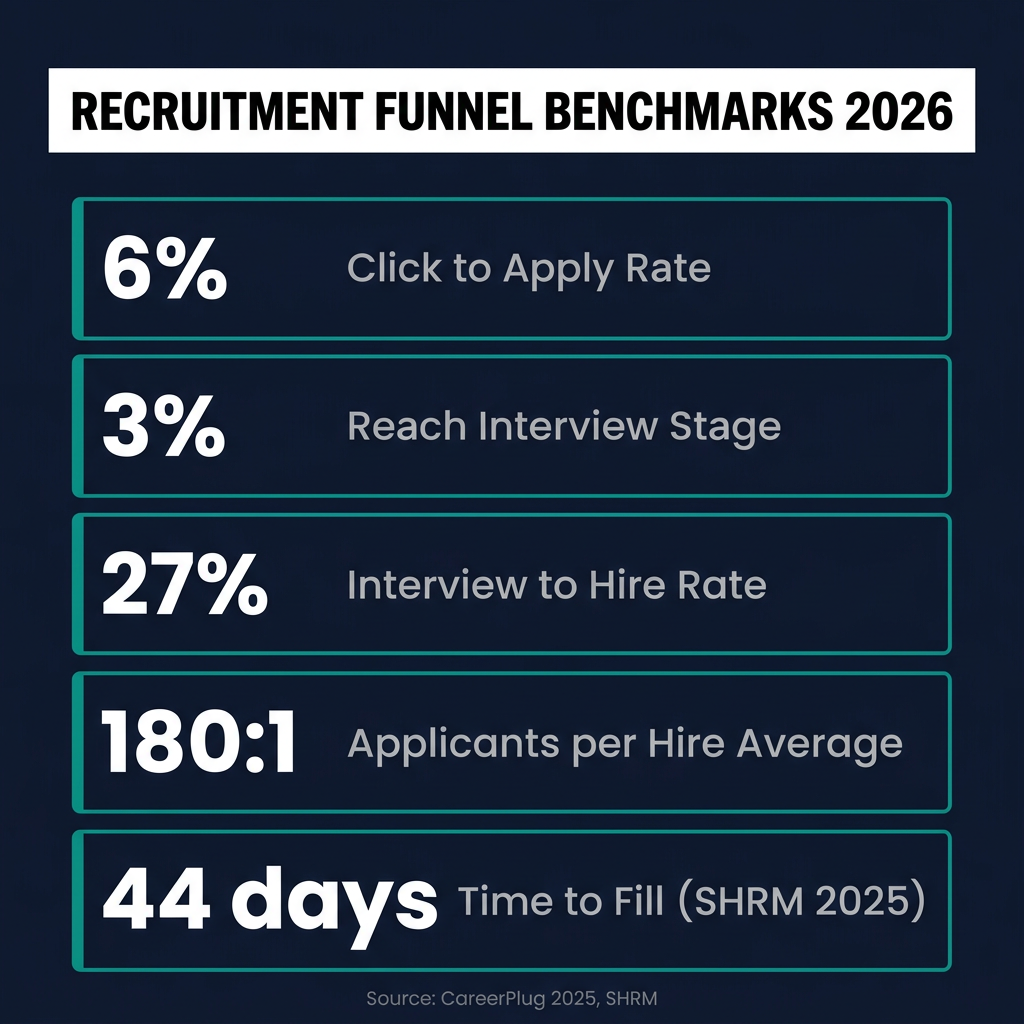
Here is a sobering statistic: according to CareerPlug’s 2025 Recruiting Metrics Report analyzing over 10 million applications, only 3% of job applicants ever reach the interview stage. For technology roles specifically, you need an average of 191 applicants to make one hire. Meanwhile, the time-to-fill for technical positions has climbed to 48 days, up 24% since 2021.
These numbers reveal a fundamental truth about modern talent acquisition: the war for technical talent is not won by posting more job ads. It is won by building systematic, data-driven talent acquisition strategies that identify, engage, and convert the right candidates faster than your competitors.
This guide examines what separates high-performing talent acquisition functions from the rest, with specific focus on the Poland and Central Eastern Europe (CEE) market. Whether you are a CTO scaling your engineering team, an HR leader rebuilding your recruitment process, or a founder establishing your first technical hires, the frameworks here will help you hire better and faster.
What Is Talent Acquisition Strategy (And Why Most Companies Get It Wrong)
Talent acquisition strategy is the systematic approach organizations use to identify, attract, assess, and hire the people they need to achieve business objectives. Unlike reactive recruitment, which focuses on filling immediate vacancies, talent acquisition takes a long-term view: building pipelines, developing employer brand, and creating sustainable competitive advantage through human capital.
The distinction matters more now than ever. Recruitment asks: “How do we fill this open role?” Talent acquisition asks: “How do we build the workforce capabilities we will need in 12, 24, and 36 months?” This forward-looking approach recognizes that talent is not an interchangeable resource but a strategic asset that determines organizational success.
Most companies confuse the two. They post job ads, wait for applications, screen resumes, conduct interviews, and make offers. This reactive approach worked when candidates were plentiful and competition was limited. It fails in the current market, where 70% of the global workforce consists of passive candidates who will not apply to your job postings, and applications per hire have tripled since 2021.
The data tells a clear story. According to Ashby’s 2025 Talent Trends Report covering 31 million applications and 95,000 jobs, recruiters are now managing 93% more applications than in 2021 while team headcounts have remained flat. Hires per recruiter have dropped from roughly 7 per quarter to 5.4 per quarter. Recruiters are doing more work for less output, processing higher volumes while closing fewer total hires.
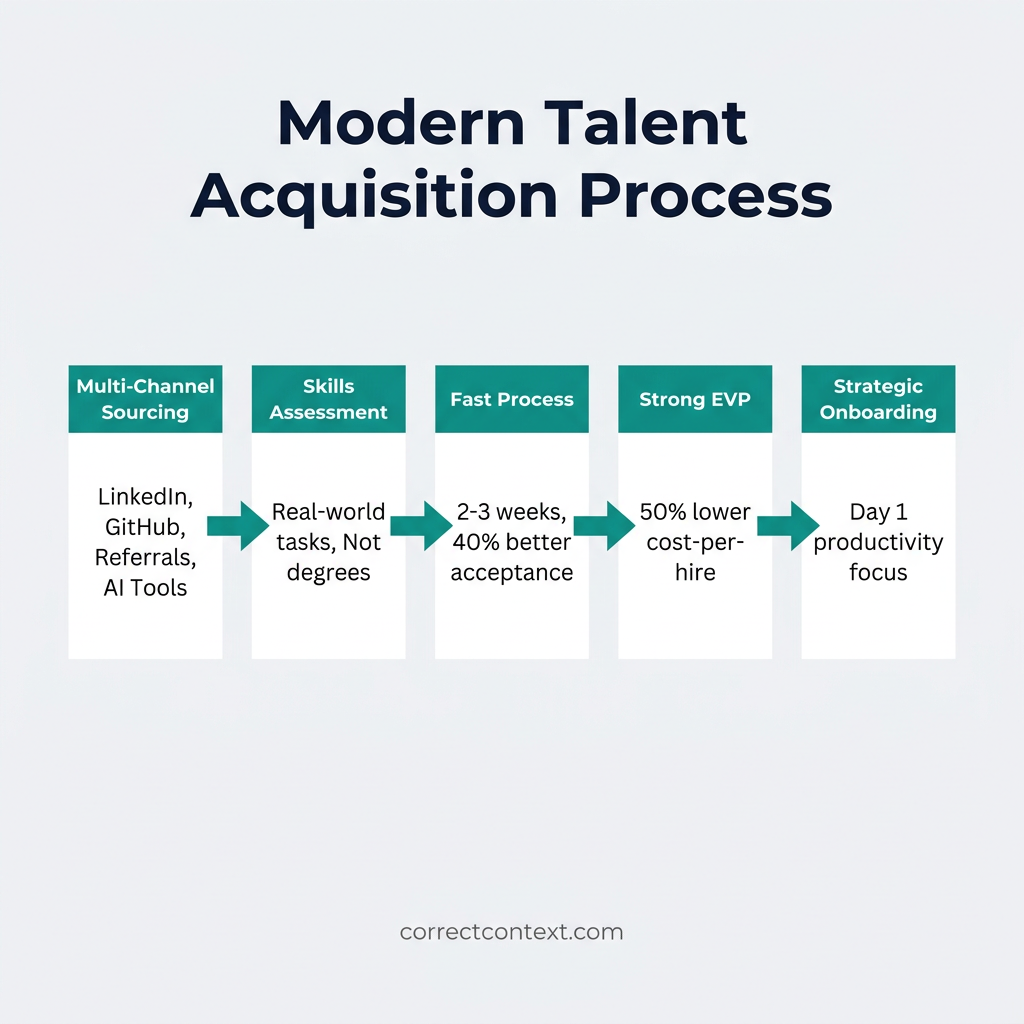
The solution is not working harder or adding more recruiters to handle the volume. It is building a talent acquisition strategy with four core components that fundamentally change how you approach hiring:
1. Multi-Channel Sourcing Architecture: Relying on job boards alone captures only active job seekers, who represent just 30% of the potential talent market. A strategic approach combines LinkedIn Recruiter, GitHub sourcing, employee referrals, talent communities, and AI-powered sourcing tools to reach both active and passive candidates. Organizations using diverse sourcing channels fill roles 40% faster than those relying on job boards alone.
2. Skills-Based Assessment Frameworks: Degrees and credentials are losing signal value in a world where skills become obsolete faster than ever. According to TestGorilla’s 2024 State of Skills-Based Hiring report, skills-based hiring increased to 81% as employers shift focus to demonstrated competencies rather than formal education. This approach reduces bias, expands the talent pool, and improves quality of hire.
3. Process Velocity Systems: Speed is a competitive weapon in talent acquisition. Cronofy’s 2024 Candidate Expectations Report found that 42% of candidates withdraw from recruiting processes when interview scheduling takes too long. Companies with streamlined 2-3 week hiring processes report 40% higher offer acceptance rates than those with traditional 45+ day processes.
4. Employer Brand Infrastructure: Companies with strong employer branding experience a 50% reduction in cost-per-hire, according to Universum Global research. Your employer brand is not your careers page. It is the sum of every candidate interaction, employee review, and market signal about what it is like to work for your company. In a market where 88% of candidates say employer branding influences their decision to apply, this is not optional.
The State of Tech Talent in Poland and CEE: 2026 Market Reality
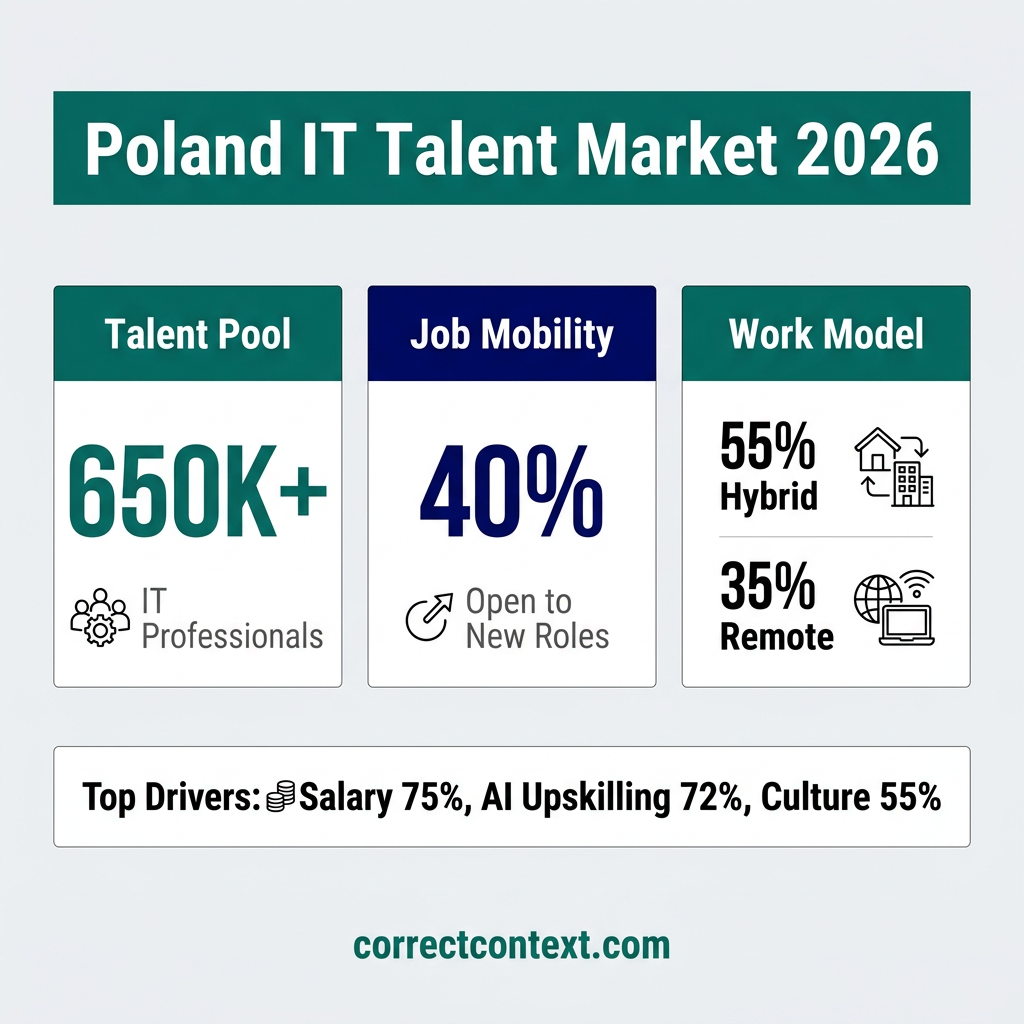
Poland has emerged as the premier IT hub in Central and Eastern Europe. With nearly 650,000 IT/ICT professionals and a mature technology ecosystem, the country offers a unique combination of technical excellence, cost efficiency, and cultural alignment with Western European markets. Understanding the current market dynamics is essential for building an effective talent acquisition strategy.
Professional Distribution and Experience Levels
The Polish IT market has evolved significantly from its outsourcing origins to become a high-value innovation hub. Current market data from RemoDevs and industry analyses reveal a balanced professional ecosystem with specific characteristics at each level:
- Trainee/Entry Level (~5%): Graduates and career changers facing increasingly competitive entry barriers. The market no longer absorbs juniors at scale without clear business justification.
- Junior Developers (~15%): Professionals with 1-3 years experience. Demand has slowed compared to previous years, but they remain a vital part of the ecosystem, particularly in high-growth companies.
- Mid-Level Specialists (48%): The backbone of the Polish IT workforce, with 3-7 years experience driving most projects. This segment represents the largest addressable market but also the most competitive.
- Senior Professionals (24%): Engineers with 7+ years experience who are highly sought after for complex problem solving and technical leadership roles.
- Expert/Architect Level (~8%): Strategic roles requiring 10+ years experience and deep niche expertise in areas like AI/ML, cloud architecture, or cybersecurity.
This distribution has significant implications for talent acquisition strategy. The mid-level segment represents your largest addressable market, but also the most competitive. Senior and expert-level talent requires proactive sourcing and compelling value propositions to attract, as they are rarely actively job searching.
Job Mobility and Candidate Behavior
Polish IT professionals demonstrate selective job mobility that differs from more fluid markets like the US or UK. Approximately 40% are considering new opportunities within the next 12 months, but their expectations have evolved beyond simple salary increases:
Primary Drivers for Job Changes (2026 data from RemoDevs research):
- Salary advancement opportunities: 75% of respondents
- Career growth and AI upskilling prospects: 72%
- Project diversity and technical challenges: 60%
- Team culture and management quality: 55%
Market sentiment reveals cautious optimism, with 70% of IT professionals expressing satisfaction with their current roles while remaining open to compelling opportunities. This emphasizes the need for strategic recruitment planning rather than reactive hiring. Your talent acquisition approach must sell the opportunity, not just post a job description.
Salary Dynamics and Compensation Trends
Salary expectations vary significantly by experience level. According to JustJoinIT’s IT Salary Report 2025/2026 based on nearly 111,000 job offers published in 2025:
- Junior developers: 0-5% expected increases (stagnation due to high supply of candidates entering the market)
- Mid-level professionals: 4-7% increases (stabilized growth aligning slightly above inflation)
- Senior specialists: 5-10% increases (driven mainly by niche specializations like AI/Cloud)
- Expert level: Project-based negotiation with high variance dependent on demonstrated ROI
Currency preferences reflect Poland’s integration into global IT markets: 45% prefer PLN, 32% prefer EUR, and 23% choose USD. This highlights the demand for flexible, internationally competitive compensation packages, particularly for B2B contractors working with international clients.
Work Model Preferences
The market has shifted decisively toward hybrid and remote work models. As of early 2026, the distribution is:
- Fully On-site: ~10% (required mainly for hardware, R&D, and security-critical roles)
- Hybrid (2-3 days office): ~55% (standard for most corporate and banking sectors)
- Fully Remote: ~35% (dominant in software houses and international B2B contracting)
Companies offering well-defined flexibility report retention rates 20-25% higher and a notable increase in qualified applicants. Flexibility has become non-negotiable for employer attractiveness. Rigid return-to-office mandates have measurable costs: 8 in 10 companies that implemented RTO mandates admitted they lost talent because of it, and hire rates decline by 17% after RTO mandates according to research from Baylor University.
The CEE Region as a Talent Hub
Beyond Poland, the broader Central and Eastern Europe region offers significant talent advantages. According to PwC CEE research, the region has a large and agile talent pool of more than two million tech specialists. This concentration of technical expertise, combined with strong STEM education systems and competitive cost structures, makes CEE an attractive destination for companies looking to build engineering teams.
The region has successfully transitioned from a cost-effective outsourcing destination to a hub of high-value innovation. Companies are no longer just looking for cheap labor; they are looking for skilled engineers who can drive product development and technical innovation. This shift has been accompanied by improvements in English proficiency, project management capabilities, and cultural alignment with Western European and North American business practices.
Key advantages of the CEE region include: strong technical universities producing highly skilled graduates; cultural and geographic proximity to Western Europe; competitive salary expectations compared to Western Europe and North America; high English proficiency rates among IT professionals; and established legal frameworks for international employment and contracting.
Building Your Multi-Channel Sourcing Architecture
The most effective talent acquisition strategies do not rely on a single sourcing channel. They build diversified sourcing architectures that reach candidates wherever they are. According to LinkedIn’s 2025 Future of Recruiting report, teams using diversified sourcing strategies fill roles 40% faster than those relying on job boards alone.
Channel Performance Benchmarks
Not all sourcing channels perform equally. Understanding the conversion rates by channel allows you to optimize your sourcing investment and allocate resources where they generate the highest return:
| Sourcing Channel | Applicants per Hire | Time to Fill | Cost per Hire | Quality of Hire |
|---|---|---|---|---|
| Employee Referrals | ~25:1 | 29 days | $500-800 | Highest |
| Proactive Sourcing (LinkedIn/GitHub) | ~40:1 | 35 days | $1,200-1,800 | High |
| Job Boards (General) | ~180:1 | 45 days | $2,000-3,000 | Medium |
| Job Boards (Tech-Specific) | ~120:1 | 42 days | $1,500-2,500 | Medium-High |
| University/Early Career | ~60:1 | 60 days | $1,800-2,500 | Medium |
The data is clear: referred candidates and proactively sourced candidates dramatically outperform inbound applicants. A sourced candidate is 5x more likely to be hired than an inbound applicant, according to Gem’s 2025 Recruiting Benchmarks report analyzing 140 million applications.
LinkedIn Recruiter: Best Practices for 2026
LinkedIn remains the dominant platform for professional sourcing, but effective use requires more than basic keyword searches. Here is how top talent acquisition teams leverage LinkedIn in 2026:
Boolean Search Mastery: Advanced search strings combining job titles, skills, and exclusions surface candidates missed by basic searches. Example: (“Software Engineer” OR “Backend Developer”) AND (Python OR Go) AND (“microservices” OR “distributed systems”) NOT (“frontend” OR “full stack”)
Engagement Sequences: Single outreach messages have low response rates. Effective sequences include multiple touchpoints:
- Message 1: Personalized connection request referencing specific work or background
- Message 2: Value-add content (relevant article, company update, industry insight)
- Message 3: Direct opportunity presentation with clear value proposition
- Message 4: Final check-in with alternative contact option or future timing
Signal-Based Sourcing: Monitor profile updates, new certifications, and activity patterns. A developer who just completed a Kubernetes certification and updated their profile is signaling active career consideration. Timing your outreach to these moments dramatically improves response rates.
GitHub and Technical Community Sourcing
For technical roles, GitHub is an underutilized sourcing goldmine. Engineers who contribute to open source projects, maintain public repositories, or actively participate in technical discussions demonstrate skills that resumes cannot capture. Their code quality, collaboration patterns, and technical interests are all visible.
GitHub Sourcing Framework:
- Search for repositories relevant to your tech stack and business domain
- Identify contributors with consistent, high-quality code contributions
- Review commit history for collaboration patterns and communication style
- Cross-reference with LinkedIn for contact information and professional background
Stack Overflow, Dev.to, and specialized communities like Poland’s JustJoinIT forum offer similar opportunities. The key is engaging authentically: these are technical communities first, recruiting channels second. Value-adding participation builds relationships that convert to hiring opportunities.
Employee Referral Program Optimization
Employee referrals generate 7% of all hires while representing only about 30% of applicants, according to AttoTime research. Referred candidates are hired 55% faster and have higher retention rates than candidates from other sources.
Best-in-class referral programs in 2026 include several key elements:
- Immediate Recognition: Bonuses paid at hire, not after probation periods, to reinforce the behavior
- Non-Monetary Rewards: Extra PTO, learning budgets, recognition programs, and experiential rewards
- Program Marketing: Regular reminders, success stories, leaderboards, and internal campaigns
- Referral Experience: Tracking and feedback so employees know their referral’s status throughout the process
AI-Powered Sourcing Tools
AI sourcing platforms have matured significantly and are now essential tools for competitive talent acquisition. Tools like Juicebox’s PeopleGPT, Pin, and HireEZ aggregate data from multiple channels and use autonomous agents to identify and engage candidates.
According to LinkedIn’s 2025 report, 37% of organizations are now actively integrating generative AI into their hiring process, up from 27% the prior year. Teams using AI-assisted sourcing and messaging are 9% more likely to make a quality hire.
However, AI in recruitment remains assistive, not autonomous. As one talent leader noted: “AI can handle steps one through nine of the hiring process without breaking a sweat. Sourcing, resume matching, outreach, scheduling, initial screens. But step 10 is where a human sits down with the finalists and makes the call. That part is not going away anytime soon.”
Skills-Based Assessment: Moving Beyond Credentials
The traditional resume-screening approach is failing in the modern talent market. With 64% of recruiters reporting more look-alike applications due to AI-generated resumes, and only 37% of employers viewing credentials as a reliable indicator of talent, the shift to skills-based assessment is accelerating.
The Business Case for Skills-Based Hiring
According to TestGorilla’s 2024 research, skills-based hiring increased to 81% as employers shift focus to competencies rather than formal education. The benefits are measurable and significant:
- 46% faster hiring cycles when using AI-powered skills assessments
- Reduced bias in hiring decisions by focusing on demonstrated ability
- Higher quality of hire and lower turnover rates
- Access to non-traditional talent pools including career changers and self-taught developers
Assessment Methods by Role Type
Different roles require different assessment approaches. Here is how leading companies structure their technical assessments in 2026:
| Role Category | Assessment Components | Duration | Pass Rate |
|---|---|---|---|
| Backend Engineers | Coding challenge + System design discussion | 2-3 hours | 35-40% |
| Frontend Engineers | UI implementation + Code review exercise | 2 hours | 40-45% |
| DevOps/SRE | Infrastructure scenario + Troubleshooting | 2.5 hours | 30-35% |
| Data Engineers | SQL challenge + Pipeline design | 2 hours | 35-40% |
| AI/ML Engineers | Model implementation + Architecture discussion | 3 hours | 25-30% |
Candidate Experience in Assessment
Assessment design significantly impacts candidate experience and offer acceptance. According to market research on Polish IT professionals, 86% prefer technical interviews with real-world scenarios, 74% favor remote coding challenges and portfolio reviews, and 60% value pair programming sessions.
Best practices for assessment experience include:
- Time Respect: Cap take-home assignments at 3-4 hours maximum. Longer assignments disproportionately filter out candidates with current jobs or caregiving responsibilities.
- Real-World Relevance: Use problems similar to your actual work. Abstract algorithmic puzzles have low correlation with job performance.
- Feedback Commitment: Provide constructive feedback to all finalists. This builds goodwill and improves your employer brand.
- Transparency: Clearly communicate evaluation criteria upfront so candidates know what success looks like.
Building Your Talent Acquisition Technology Stack
Modern talent acquisition requires a cohesive technology stack that streamlines workflows, automates repetitive tasks, and provides data-driven insights. The right tech stack can reduce time-to-fill by 30-50% while improving quality of hire and candidate experience.
Essential Components of a TA Tech Stack
A comprehensive talent acquisition technology stack typically includes several core categories:
Applicant Tracking System (ATS): The central hub of your recruitment operations. Modern ATS platforms do more than store resumes; they manage workflows, enable collaboration, and provide analytics. Look for systems with strong integration capabilities, mobile-friendly interfaces, and robust reporting.
Candidate Relationship Management (CRM): While ATS systems manage active applicants, CRMs nurture relationships with passive candidates over time. This is critical for building talent pipelines and maintaining engagement with high-potential candidates who are not yet ready to move.
Sourcing and AI Tools: Platforms like LinkedIn Recruiter, HireEZ, and SeekOut use AI to identify and engage candidates across multiple channels. These tools can scan millions of profiles to surface candidates matching your criteria, dramatically expanding your reach beyond traditional job postings.
Assessment Platforms: Tools like TestGorilla, Codility, and HackerRank provide standardized skills assessments that reduce bias and improve predictive validity. These platforms integrate with your ATS to create seamless assessment workflows.
Interview and Scheduling Tools: Calendly, GoodTime, and similar tools eliminate the back-and-forth of interview scheduling. Video interviewing platforms like Zoom, HireVue, and Spark Hire enable remote screening at scale.
Analytics and Business Intelligence: Tools that aggregate data from across your stack to provide actionable insights on sourcing effectiveness, process bottlenecks, and quality of hire.
Integration and Data Flow
The value of your tech stack depends on how well components work together. Look for platforms with open APIs and pre-built integrations. Data should flow seamlessly from sourcing to assessment to offer, with each tool enriching the candidate profile.
Key integration points include: ATS-to-CRM synchronization for pipeline management; sourcing tool-to-ATS candidate import; assessment platform-to-ATS score passing; and calendar tool-to-ATS interview scheduling.
Process Velocity: Why Speed Is Your Competitive Advantage
In talent acquisition, speed is not about cutting corners or rushing decisions. It is about removing friction and unnecessary delays. Companies with streamlined hiring processes do not assess less. They assess more efficiently.
The data on hiring speed is compelling and consistent across multiple studies:
- Recruitment processes lasting 2-3 weeks result in 40% higher offer acceptance rates
- 42% of candidates withdraw from processes with slow scheduling
- Average time-to-hire has increased 24% since 2021, creating competitive opportunity for faster movers
The Cost of Slow Hiring
Every day a role remains unfilled has direct and indirect costs that compound over time. Direct costs include recruiter time, advertising spend, and hiring manager interview hours. Indirect costs include lost productivity, delayed projects, and team burnout from covering unfilled roles.
For a senior software engineer role with a $120,000 annual salary, the cost of a 60-day time-to-fill versus a 30-day time-to-fill can exceed $15,000 in lost productivity alone. When multiplied across multiple open roles, these costs become significant.
Process Optimization Framework
High-velocity hiring processes share common characteristics that can be implemented systematically:
Structured Stages: Replace open-ended interview rounds with defined stages and clear criteria: Recruiter Screen (30 min) → Technical Assessment (2 hours) → Hiring Manager Interview (45 min) → Team Interview (1 hour) → Offer. Each stage has explicit pass/fail criteria.
Calendar Commitment: Hiring managers block dedicated interview slots weekly. When a candidate passes the technical assessment, they can be scheduled within 48 hours, not next week. This requires discipline but dramatically reduces time-to-fill.
Same-Day Feedback: Interviewers submit evaluations within 4 hours of the interview. Decisions are made within 24 hours of the final interview. Momentum matters in competitive hiring markets.
Parallel Processing: Run background checks and reference calls during the final interview stage, not after offer approval. This can shave a week off the total process.
Technology Enablers
Modern talent acquisition technology directly addresses velocity bottlenecks:
- AI Scheduling: Automated interview scheduling eliminates the 3-email back-and-forth that adds days to each transition
- Video Interviewing: Use of video interviews has increased 86% since 2020, enabling faster screening and remote assessment without travel delays
- Assessment Platforms: Automated coding challenges and skills assessments provide immediate scoring and ranking
- CRM Integration: Candidate relationship management tools maintain engagement during longer processes with automated nurture sequences
Employer Branding: Your Always-On Talent Magnet
Employer branding is the most underinvested component of talent acquisition strategy, yet it delivers the highest long-term returns. Companies with strong employer branding experience a 50% reduction in cost-per-hire and attract higher-quality applicants without increased advertising spend.
Yet according to Rally Recruitment Marketing’s 2026 research, employer branding budgets and broad talent attraction campaigns are being quietly defunded at many companies. This creates significant opportunity for organizations willing to invest while competitors retreat.
The Components of Employer Brand
Your employer brand is not your careers page. It is the sum of every touchpoint a candidate has with your organization:
- Digital Presence: Careers site, social media profiles, Glassdoor reviews, employer review sites, and search results
- Candidate Experience: Application process simplicity, communication quality, interview experience, and feedback timeliness
- Employee Advocacy: What your employees say about you on social media, in their networks, and at industry events
- Market Reputation: Media coverage, industry recognition, thought leadership, and community involvement
According to BrandPointZero research, 80% of candidates check the social profiles of current employees before applying. Your employees are your most credible employer brand ambassadors, and their authentic voices carry more weight than any corporate messaging.
Employer Value Proposition (EVP) Development
Your EVP is the unique set of offerings and values you provide in exchange for an employee’s skills and experience. A compelling EVP answers the question: “Why should I work for you instead of your competitor?”
Key EVP components for tech talent in 2026 include:
- Technical Growth: Access to cutting-edge technologies, learning budgets, conference attendance, and time for experimentation
- Career Progression: Clear advancement paths, mentorship programs, internal mobility, and leadership development
- Work Flexibility: Remote/hybrid options, flexible hours, results-oriented work environment, and respect for work-life boundaries
- AI Enablement: Access to premium AI tools and Copilots, increasingly important per 2026 market data showing this as a priority for 72% of candidates
- Compensation: Competitive base salary, equity participation, performance bonuses, and transparent pay practices
Content Strategy for Talent Attraction
Effective employer branding requires consistent content that showcases your culture and opportunities across multiple channels:
- Engineering Blog: Technical deep-dives, architecture decisions, lessons learned from failures, and innovation spotlights
- Employee Spotlights: Real stories from real team members about their growth, challenges, and why they stay
- Behind-the-Scenes Content: Day-in-the-life videos, office tours, team events, and authentic glimpses into daily work
- Thought Leadership: Conference talks, open source contributions, technical publications, and industry commentary
Employer Brand Metrics
Measuring employer brand impact requires tracking both quantitative and qualitative indicators. Key metrics include: careers page conversion rate (visitors to applicants); Glassdoor rating and review volume; employee Net Promoter Score (eNPS); social media engagement rates on employer content; and cost-per-hire trends over time.
Regular candidate experience surveys provide qualitative feedback on how your brand is perceived. Exit interviews offer insights into why employees leave and what could have retained them. Both data sources inform continuous improvement of your employer value proposition.
Measuring Talent Acquisition Success
What gets measured gets managed. High-performing talent acquisition functions track metrics across four dimensions: efficiency, quality, experience, and business impact. Without measurement, optimization is impossible.
Key Performance Indicators
| Metric Category | Key Metrics | 2026 Benchmarks |
|---|---|---|
| Efficiency | Time-to-fill, Cost-per-hire, Sourcing channel efficiency | 45 days median, $1,200 median cost |
| Quality | Quality of hire, 90-day retention, Hiring manager satisfaction | 85%+ satisfaction, 90%+ retention |
| Experience | Candidate NPS, Offer acceptance rate, Application completion | 77-92% acceptance, 6% apply rate |
| Business Impact | Time-to-productivity, Diversity metrics, Pipeline health | 30-60-90 day milestones |
Pipeline Health Metrics
Beyond lagging indicators like time-to-fill, leading indicators reveal pipeline health and predict future hiring success:
- Pipeline Coverage: 3x pipeline coverage for critical roles (3 qualified candidates for every 1 hire needed)
- Source Mix: Diversified sourcing with no single channel exceeding 40% of hires to reduce dependency risk
- Passive Candidate Ratio: 60%+ of sourced candidates from passive channels indicating proactive sourcing maturity
- Engagement Rates: 25%+ response rates to outbound sourcing messages showing message-market fit
Building a Data-Driven TA Function
Transforming talent acquisition from an administrative function to a strategic capability requires building analytical muscle. Start by establishing baseline metrics for your current state. Identify the biggest bottlenecks and opportunities in your funnel. Implement regular reporting rhythms: weekly operational metrics for recruiters, monthly business reviews for leadership, and quarterly strategic assessments.
Invest in training your team to interpret data and make evidence-based decisions. The best talent acquisition professionals combine relationship skills with analytical capabilities. They can read a dashboard, identify trends, and adjust strategy accordingly.
Key Takeaways
- The funnel has fundamentally changed: Applications per hire have tripled since 2021. Reactive posting and praying no longer works. Strategic talent acquisition requires proactive sourcing, skills-based assessment, and process velocity.
- Channel diversification is essential: Referred and proactively sourced candidates convert 4-8x better than inbound applicants. Build a multi-channel sourcing architecture that includes LinkedIn, GitHub, referrals, and AI-powered tools.
- Speed is a competitive weapon: Companies with 2-3 week hiring processes report 40% higher offer acceptance rates than those with traditional 45+ day processes. Every day of delay increases candidate dropout and competitive loss.
- Skills trump credentials: 81% of employers have shifted to skills-based hiring. Design assessments that measure real-world capabilities, not resume keywords or pedigree.
- Employer branding delivers ROI: Strong employer branding reduces cost-per-hire by 50%. Invest in your EVP, employee advocacy, and candidate experience as strategic priorities.
- Poland and CEE offer unique opportunity: With 650,000 IT professionals, strong STEM education, competitive costs, and high English proficiency, the region is a strategic talent source for European and global companies.
- AI is assistive, not autonomous: Use AI for sourcing, screening, and scheduling, but keep human judgment at the final decision point. The best results come from human-AI collaboration, not replacement.
- Technology amplifies strategy: The right tech stack can reduce time-to-fill by 30-50% and improve quality of hire. Invest in integrated tools for sourcing, assessment, and analytics.
- Data drives optimization: What gets measured gets managed. Track metrics across efficiency, quality, experience, and business impact. Use data to identify bottlenecks and continuously improve.
Frequently Asked Questions
What is the difference between recruitment and talent acquisition?
Recruitment is reactive: filling immediate vacancies as they arise through job postings and applicant screening. Talent acquisition is strategic: building long-term workforce capabilities through proactive sourcing, employer branding, and pipeline development. Recruitment asks “How do we fill this role?” Talent acquisition asks “How do we build the team we need for the next three years?” The distinction becomes critical in competitive markets where reactive approaches fail to deliver quality hires.
How long should a technical hiring process take?
Best-in-class technical hiring processes complete in 2-3 weeks from first contact to offer. This includes recruiter screen, technical assessment, hiring manager interview, and team interview. Processes exceeding 4 weeks see significant candidate dropout, with 42% of candidates withdrawing from slow-moving processes according to Cronofy’s 2024 research. Speed is not about cutting assessment quality but removing friction and delays between stages.
What are the most effective sourcing channels for tech talent?
Employee referrals and proactive sourcing (LinkedIn Recruiter, GitHub) consistently outperform job boards across all metrics. Referred candidates are hired 55% faster with higher retention and better cultural fit. Proactively sourced candidates are 5x more likely to be hired than inbound applicants. A diversified sourcing strategy should target referrals (30-40% of hires), proactive sourcing (30-40%), and job boards (20-30%) to balance quality, speed, and volume.
How important is employer branding for tech hiring?
Employer branding is critical and often underinvested. Companies with strong employer branding see 50% lower cost-per-hire and attract higher-quality applicants without increased advertising spend. 88% of candidates say employer branding influences their decision to apply. In competitive tech markets, your employer brand is often the differentiator between securing top talent and losing them to competitors. Invest in authentic employee advocacy and candidate experience.
What role does AI play in modern talent acquisition?
AI is currently assistive, not autonomous. It excels at sourcing (identifying candidates from large datasets), screening (processing applications against criteria), and scheduling (automating interview coordination). However, human judgment remains essential for final hiring decisions, cultural fit assessment, and candidate relationship management. 62% of employers expect to use AI for most hiring stages by 2026, but 71% of candidates oppose AI making final hiring decisions. The optimal approach is human-AI collaboration.
Why should companies consider Poland and CEE for tech hiring?
Poland and CEE offer a compelling combination of factors: 650,000+ IT professionals in Poland alone, strong STEM education traditions, high English proficiency, cultural alignment with Western Europe, competitive costs (40-60% lower than Western Europe), and EU timezone convenience. The region has evolved from simple outsourcing to high-value innovation hubs, making it ideal for building core engineering teams rather than just staff augmentation.
Sources
- CareerPlug — 2025 Recruiting Metrics Report (2025) — Analysis of 10 million+ applications across 60,000+ companies
- Ashby — 2025 Talent Trends Report (2025) — Data from 31 million applications and 95,000 jobs
- RemoDevs — IT Recruitment Trends in Poland 2026 (January 2026) — Market analysis of Polish IT talent landscape
- SHRM — 2025 Recruiting Benchmarking Report (2025) — National hiring benchmarks and trends
- LinkedIn — Future of Recruiting Report 2025 (2025) — Global recruiting trends and AI adoption
- TestGorilla — State of Skills-Based Hiring 2024 (2024) — Skills-based hiring adoption data
- PwC CEE — How CEE Can Become a Hub for Tech Talent (2026) — Regional talent market analysis
- MSH Talent — Top Recruitment Trends and Statistics for 2026 (February 2026) — Comprehensive recruiting statistics
- Gem — 2025 Recruiting Benchmarks Report (2025) — Analysis of 140 million applications
- Optiveum — IT Recruitment in Poland: 2025/2026 Market Challenges (2026) — Polish IT salary and market data
Table of content
- What Is Talent Acquisition Strategy (And Why Most Companies Get It Wrong)
- The State of Tech Talent in Poland and CEE: 2026 Market Reality
- Building Your Multi-Channel Sourcing Architecture
- Skills-Based Assessment: Moving Beyond Credentials
- Building Your Talent Acquisition Technology Stack
- Process Velocity: Why Speed Is Your Competitive Advantage
- Employer Branding: Your Always-On Talent Magnet
- Measuring Talent Acquisition Success
- Key Takeaways
- Frequently Asked Questions
- What is the difference between recruitment and talent acquisition?
- How long should a technical hiring process take?
- What are the most effective sourcing channels for tech talent?
- How important is employer branding for tech hiring?
- What role does AI play in modern talent acquisition?
- Why should companies consider Poland and CEE for tech hiring?
- Sources
Related articles



About the Author: Duke Vu