
In the modern enterprise landscape, the shift toward distributed workforces has been both a catalyst for innovation and a source of unprecedented security challenges. For Chief Information Security Officers (CISOs) and Chief Technology Officers (CTOs) in highly regulated industries like fintech and healthcare, the prospect of hiring a remote engineering team often triggers immediate concerns about data privacy, intellectual property (IP) theft, and compliance violations. The fear is not unfounded: as organizations expand their talent pools globally, the traditional security perimeter has dissolved, replaced by a complex web of home networks, personal devices, and shadow IT.
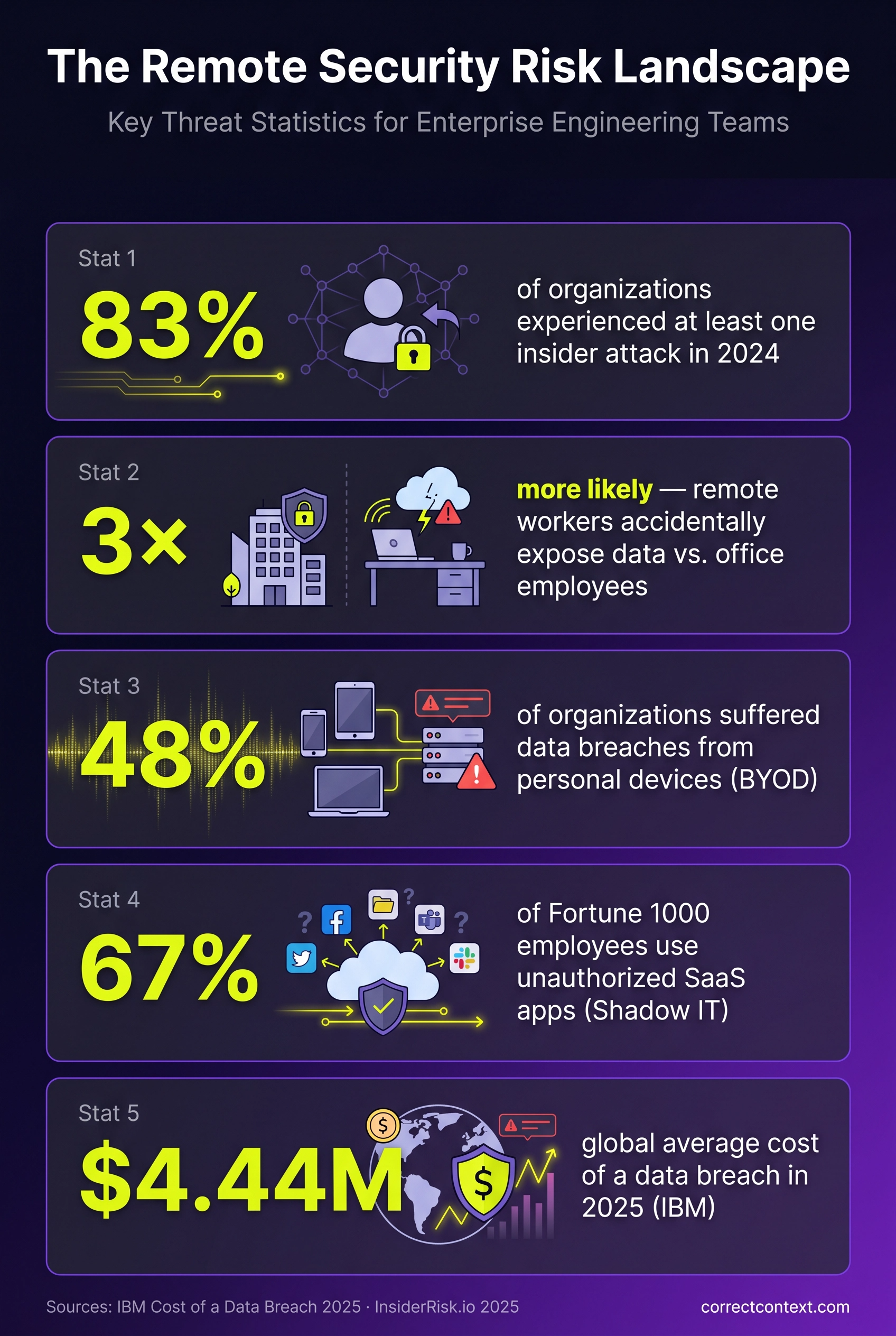
The global average cost of a data breach reached $4.44 million in 2025, with remote workers being three times more likely to accidentally expose data than their office-based counterparts [1] [2]. For enterprises and Series A+ startups looking to scale their engineering capabilities, the question is no longer whether to hire remote talent, but how to do so without compromising the integrity of their codebase or running afoul of stringent regulatory frameworks like GDPR and SOC 2.
This article explores the critical security protocols and legal frameworks that must be established before granting access to remote developers, ensuring that your organization can leverage global talent without sacrificing security.
The Remote Security Paradox: Innovation vs. Vulnerability
The drive to scale engineering teams often leads companies to explore offshore or nearshore options, particularly in regions known for strong technical talent like Poland and the broader Central and Eastern European (CEE) area. While the benefits of an extended engineering team are clear—access to specialized skills in AI, machine learning, and cloud infrastructure—the associated risks are significant.
According to a 2025 Insider Risk report, 83% of organizations experienced at least one insider attack in the past year, with 55% of these incidents directly linked to remote work [2]. The vulnerabilities stem primarily from three areas:
- Unsecured Home Networks: Consumer-grade routers and IoT devices are notoriously insecure. Over 50% of IoT devices have critical vulnerabilities, and routers now represent the most exploitable devices in home networks [2].
- The BYOD Dilemma: While 95% of organizations allow Bring Your Own Device (BYOD) policies, 48% suffered data breaches linked to unsecured personal devices [2].
- Shadow IT: The use of unauthorized applications by remote workers has exploded, with 67% of Fortune 1000 employees admitting to using unapproved SaaS tools [2].
For a CTO managing a remote software engineers team, these statistics underscore the urgent need for a robust, zero-trust security architecture.
Establishing a Zero-Trust Architecture for Remote Developers
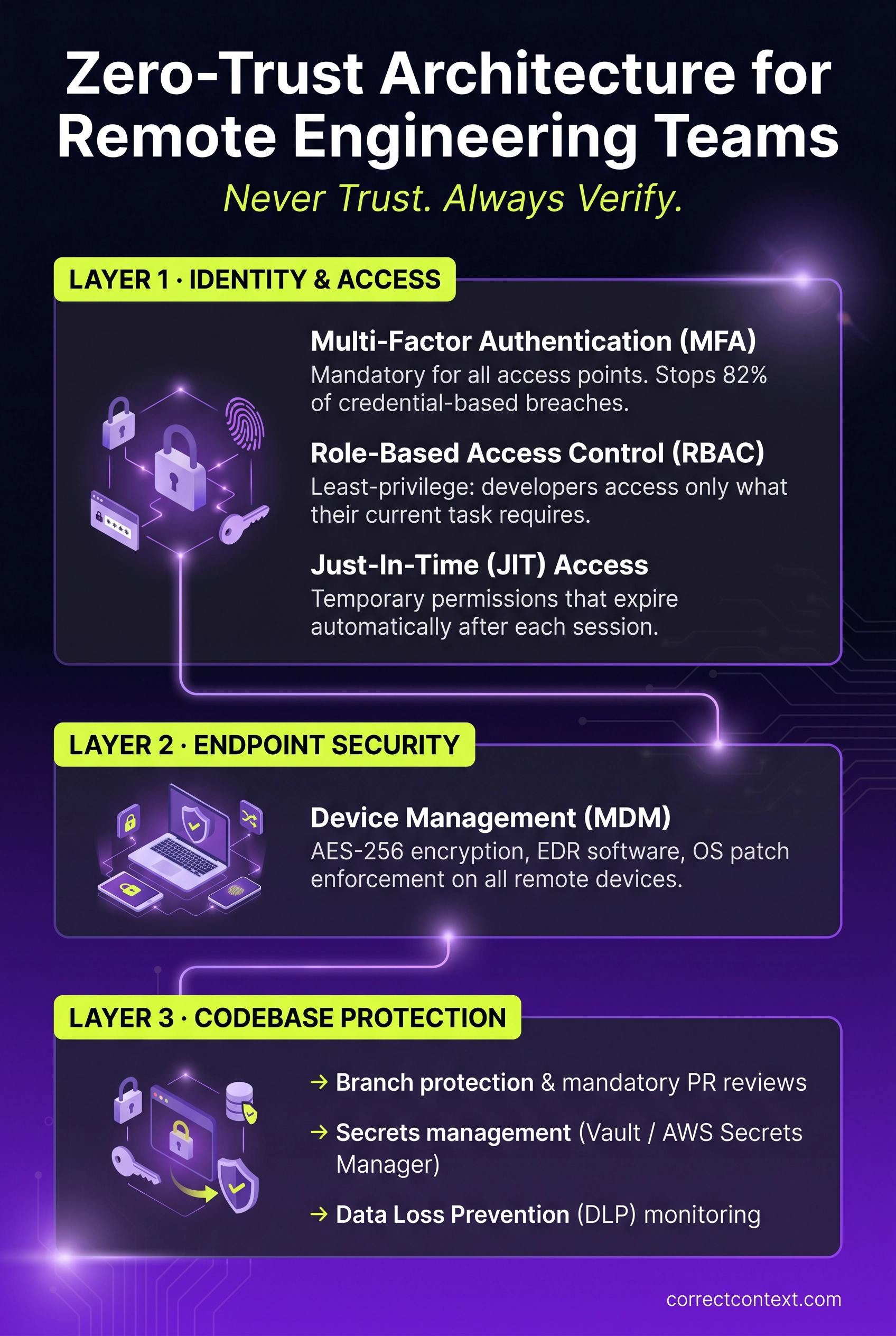
The foundational principle of securing a remote development team is the adoption of a Zero Trust security model. Zero Trust operates on the assumption that threats exist both inside and outside the network, and therefore, no user or device should be trusted by default [3].
Identity and Access Management (IAM)
Before any member of an offshore development team touches your codebase, strict IAM protocols must be in place. This includes:
- Multi-Factor Authentication (MFA): Mandatory for all access points. MFA provides a critical layer of defense against compromised credentials, which are involved in over 82% of breaches [2].
- Role-Based Access Control (RBAC): Developers should only have access to the specific repositories, databases, and environments necessary for their current tasks. The principle of least privilege minimizes the potential blast radius of any security incident.
- Just-In-Time (JIT) Access: Instead of granting standing privileges, JIT access provides temporary permissions that expire automatically, further reducing the window of opportunity for malicious actors.
Endpoint Security and Device Management
To mitigate the risks associated with BYOD and unsecured home networks, organizations must implement comprehensive endpoint security. Mobile Device Management (MDM) solutions allow IT teams to enforce security policies on remote devices, including mandatory full-disk encryption (AES-256), regular OS updates, and the installation of endpoint detection and response (EDR) software [4].
For highly sensitive projects, particularly in fintech or healthcare, companies may opt to provision corporate-owned devices to their nearshore developers in Europe, ensuring complete control over the hardware and software environment.
Securing the Codebase
Protecting the actual code and intellectual property requires specific controls within the development workflow:
- Code Repository Security: Implement branch protection rules, require mandatory pull request (PR) reviews, and enforce signed commits.
- Secrets Management: Never hardcode API keys, passwords, or tokens in the codebase. Utilize dedicated secrets management tools (e.g., HashiCorp Vault, AWS Secrets Manager) to dynamically inject credentials at runtime.
- Data Loss Prevention (DLP): Deploy DLP solutions to monitor and block the unauthorized transfer of sensitive data, such as customer PII or proprietary algorithms, outside of approved corporate channels.
Navigating the Compliance Labyrinth: GDPR and SOC 2
For enterprises operating in the US, UK, DACH, and Nordics, compliance with data protection regulations is non-negotiable. When hiring an engineering team in Poland or other CEE countries, understanding the intersection of remote work and compliance is critical.
GDPR Compliance for Remote Teams
The General Data Protection Regulation (GDPR) applies to any organization processing the personal data of EU residents, regardless of where the developers are located. When managing remote developer data privacy, several key requirements must be met:
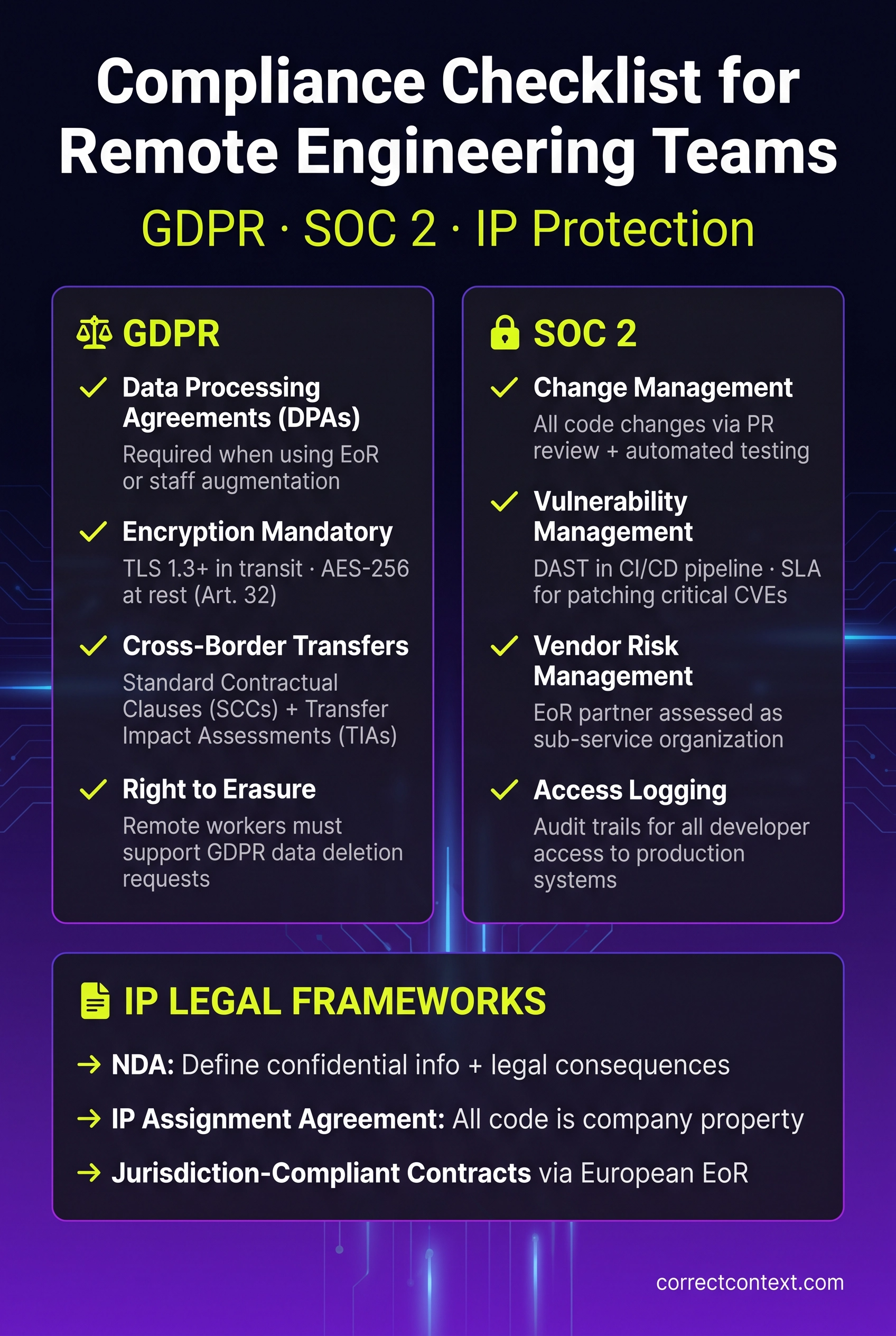
- Data Processing Agreements (DPAs): If your remote team is hired through an Employer of Record (EoR) or a staff augmentation firm, a robust DPA must be in place, outlining the specific security measures and data handling protocols required by GDPR [4].
- Encryption: GDPR Recital 83 mandates encryption for data in transit (TLS 1.3+) and at rest. This applies to all devices used by remote workers [4].
- Cross-Border Data Transfers: If your US-based company employs developers in Europe, you must ensure that data transfers comply with GDPR mechanisms, such as Standard Contractual Clauses (SCCs) and Transfer Impact Assessments (TIAs) [4].
SOC 2 Compliance in a Distributed Environment
SOC 2 (System and Organization Controls 2) is the gold standard for security compliance in the SaaS industry. For developers, SOC 2 translates into specific operational controls [5]:
- Change Management: Auditors will look for evidence that all code changes go through a defined process, including automated testing and peer review.
- Vulnerability Management: Regular dependency scanning and dynamic application security testing (DAST) must be integrated into the CI/CD pipeline, with documented SLAs for remediating discovered vulnerabilities.
- Vendor Risk Management: If you utilize an EoR in Poland to hire your team, that entity becomes a sub-service organization in the eyes of a SOC 2 auditor. You must regularly assess their security posture and ensure their controls align with your compliance requirements [6].
Legal Frameworks for IP Protection
Beyond technical controls, robust legal agreements are essential for preventing IP theft when working with remote development teams.
- Non-Disclosure Agreements (NDAs): A comprehensive NDA should clearly define what constitutes confidential information and establish the legal consequences of unauthorized disclosure.
- Intellectual Property (IP) Assignment Agreements: Ensure that all contracts, whether direct employment or through an EoR, explicitly state that all code, algorithms, and inventions created during the engagement are the exclusive property of your company [7].
- Jurisdictional Considerations: When hiring globally, ensure that your legal agreements are enforceable in the developer’s local jurisdiction. Partnering with a specialized European employer of record can mitigate these legal complexities by providing localized, compliant contracts.
Building a Secure Engineering Hub with Correct Context
Securing a remote engineering team is a multifaceted challenge that requires a delicate balance between rigorous technical controls, strict compliance adherence, and comprehensive legal frameworks. For enterprises and scaling startups, the burden of managing these complexities can be overwhelming.
This is where specialized partners provide immense value. Correct Context enables companies to build a tech hub in Poland and the broader CEE region without the traditional risks associated with remote hiring. By handling recruitment, payroll, HR, accounting, and legal compliance, Correct Context allows you to hire developers in Poland securely.
Whether you need a dedicated software team, specialized machine learning engineers, or a robust cloud engineering team, Correct Context ensures that your remote workforce operates within a secure, compliant framework, allowing your internal leadership to focus on innovation rather than administrative overhead.
By implementing Zero Trust architectures, adhering to GDPR and SOC 2 requirements, and leveraging localized legal expertise, organizations can confidently scale their engineering capabilities globally, turning the remote work paradigm from a security liability into a strategic advantage.
References
[1] IBM. (2025). Cost of a data breach 2025 | IBM
[2] InsiderRisk.io. (2025). Remote Work’s Dark Secret: Why 70% of Companies Fear Their Own Hybrid Employees | Insider Risk Research
[3] Cloudflare. (n.d.). Zero Trust Security | What’s a Zero Trust Network?
[4] GDPR Local. (2025). GDPR for Remote Workers: Compliance Guide for Teams
[5] Sourcegraph. (2025). SOC 2 compliance for developers: A complete guide | Sourcegraph
[6] Reddit r/soc2. (2026). SOC 2 for US SaaS company with overseas development team — how did you structure the audit? : r/soc2
[7] Papaya Global. (2025). NDA And Intellectual Property Agreements For Contract Employees | Papaya Global