
When enterprise innovation units and rapidly scaling startups decide to expand their engineering capabilities, the stakes are exceptionally high. The decision to bring on an external technology partner is no longer just about filling seats; it is about securing architectural continuity, accelerating time-to-market, and mitigating operational risks. Yet, a core problem persists across the industry: decision safety. Buyers, particularly CTOs and Heads of Procurement, often struggle to properly evaluate vendors, fearing the costly repercussions of choosing the wrong partner.
Understanding what to ask before choosing a tech hiring partner is the critical first step in safeguarding your investment. The right partner acts as an extension of your core team, while the wrong one can introduce technical debt, compliance risks, and project delays. This guide provides a comprehensive framework to help you navigate the vendor evaluation process, ensuring you select an engineering partner that aligns with your strategic objectives.
The High Cost of the Wrong Choice
The landscape of technology procurement is fraught with cautionary tales. While outsourcing and partnering for software development can yield significant benefits, the consequences of a misaligned partnership are severe. According to industry analysis, the failure to establish clear, concise business and technical requirements is a primary driver of vendor selection challenges [1].
When evaluating potential partners, it is essential to look beyond the initial price tag. The hidden costs of a poor vendor selection include operational disruption, failed integrations, and regulatory exposure [2]. For enterprise data units and Series A+ startups operating in highly regulated sectors like FinTech and Healthcare, these risks are magnified.
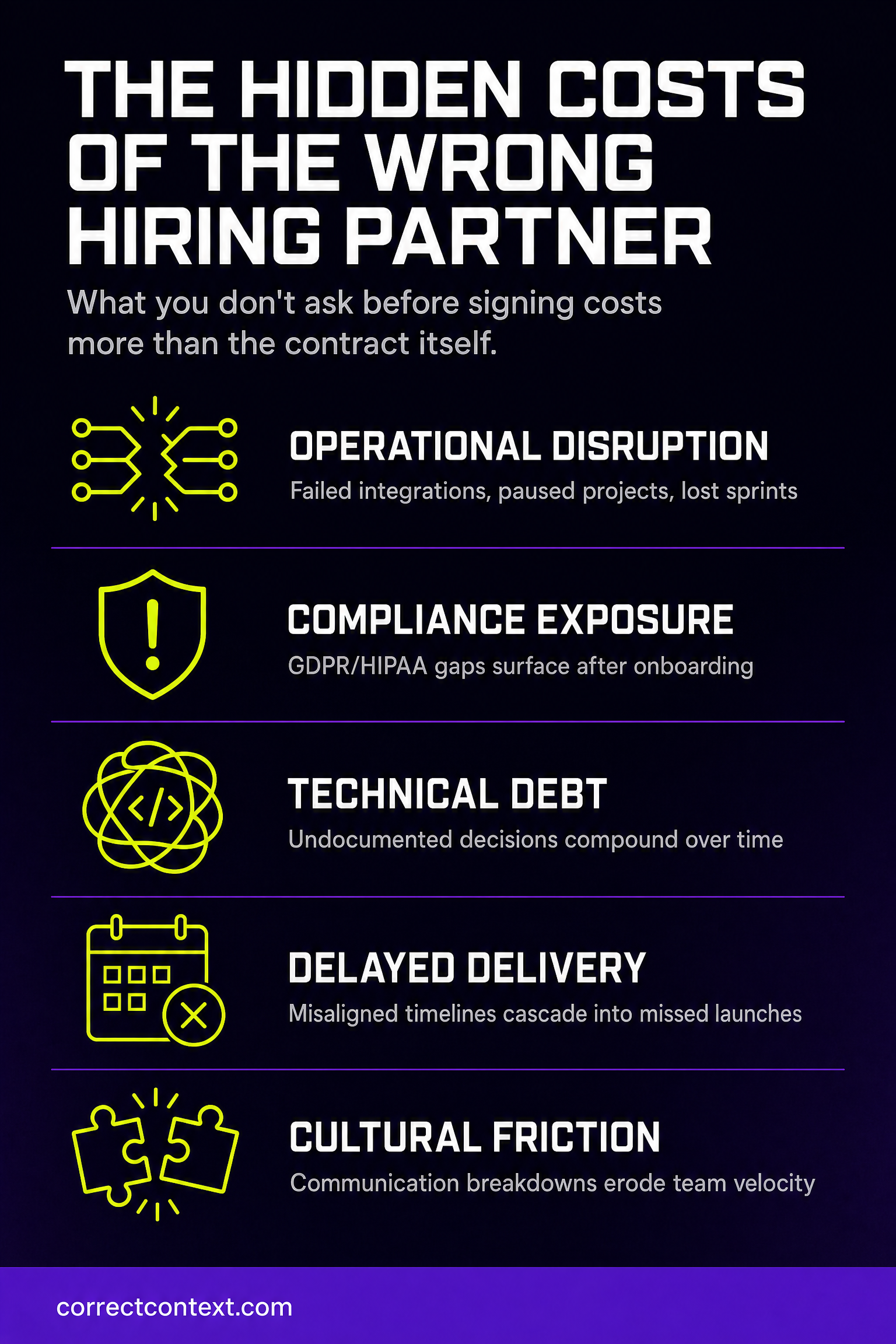
To avoid these pitfalls, organizations must shift their focus from buying a generic service to investing in a strategic solution. This requires a robust hiring partner checklist that prioritizes architectural ownership, product thinking, and cultural alignment over mere technical execution.
Essential Criteria for Vendor Evaluation in Tech
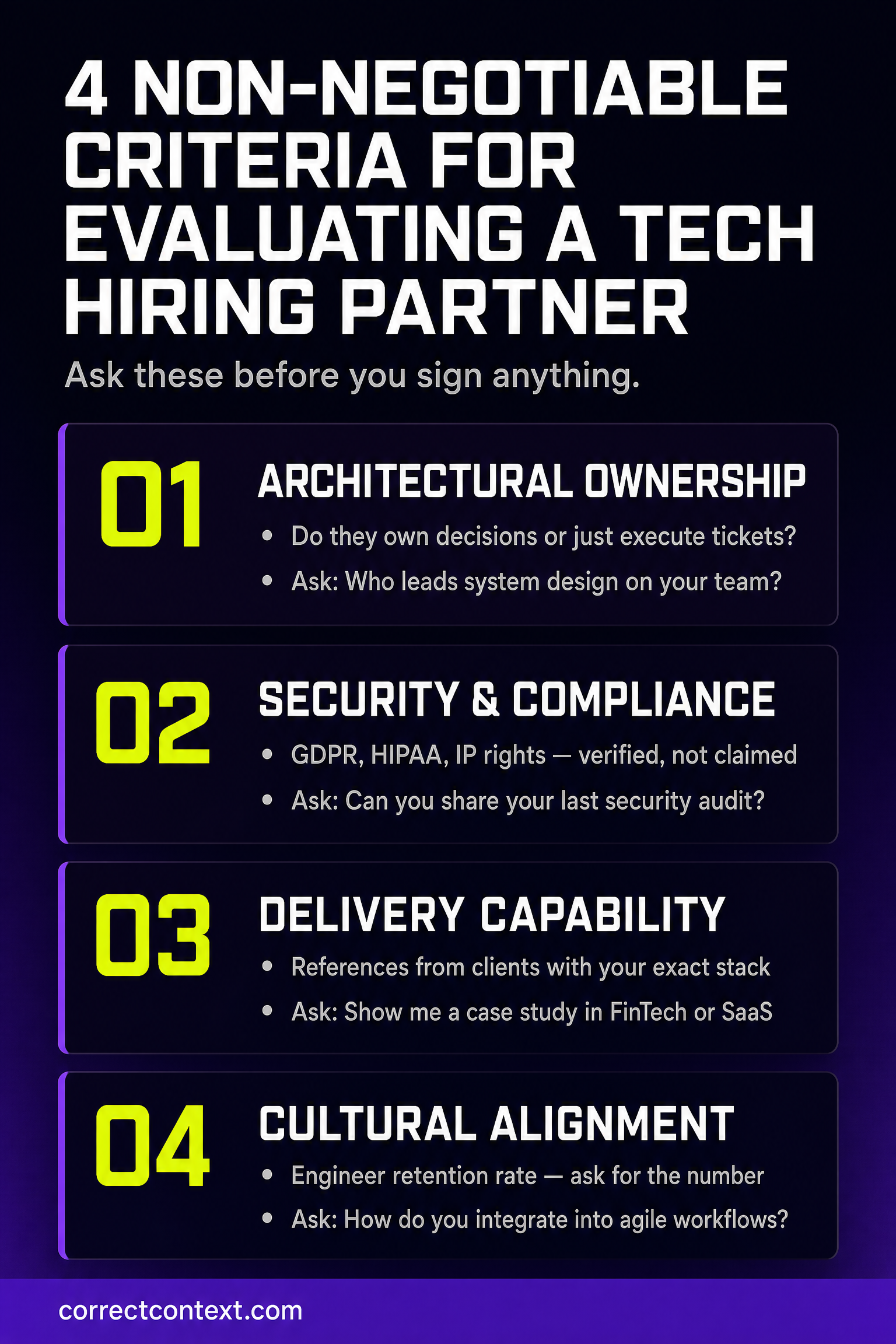
When assessing a potential extended engineering team, your evaluation framework must be comprehensive and data-driven. The following criteria are non-negotiable when selecting an engineering partner.
1. Architectural Ownership and Product Thinking
The most effective development teams do more than just execute tickets; they understand your business goals and take ownership of the system architecture. When evaluating a vendor, inquire about their approach to product development. Do they actively participate in architectural decisions, or do they passively wait for instructions?
For senior IT engineers, understanding the business problem context is paramount. A truly effective partner will focus on system architecture and real-world collaboration rather than irrelevant whiteboard algorithms during their own hiring processes. This ensures they bring top-tier talent to your project.
2. Security and Compliance
In today’s digital landscape, security cannot be an afterthought. A rigorous vendor evaluation tech process must scrutinize the partner’s security protocols and compliance certifications.
Key Questions to Ask:
- What are your data protection policies, and how do you ensure compliance with regulations such as GDPR or HIPAA?
- Can you provide documentation of recent security audits or penetration testing?
- How do you handle intellectual property rights and code ownership?
3. Delivery Capability and Technical Expertise
While a partner may claim expertise in cloud engineering team deployment or AI development team integration, you must verify their actual delivery capability.
Key Questions to Ask:
- Can you provide case studies or references from clients with similar technical stacks and business models?
- How do you ensure the continuous professional development of your engineers, particularly in rapidly evolving fields like machine learning and big data analytics?
- What is your process for managing technical debt and ensuring code quality?
4. Cultural Alignment and Communication
A dedicated development team must integrate seamlessly with your internal culture. Poor communication and misaligned work ethics are frequent causes of partnership failure.
Key Questions to Ask:
- What is your primary mode of communication, and how do you handle time zone differences?
- How do you integrate your engineers into the client’s existing agile workflows?
- What is your employee retention rate, and how do you foster a positive engineering culture?
The Shift Towards Specialized Hubs
As the demand for specialized skills outpaces local supply, many organizations are looking to build tech hubs in regions known for high engineering quality. Establishing an engineering hub Europe, particularly in Poland and the broader CEE region, has become a strategic imperative for many US and UK-based companies.
When looking to hire developers Poland, organizations benefit from a deep talent pool experienced in complex enterprise systems, AWS/Azure/GCP environments, and advanced data analytics. However, navigating the legal and administrative complexities of international hiring requires a partner adept in employer of record Poland services.
A comprehensive partner will handle the recruitment, payroll, HR, and legal compliance, allowing you to hire in Europe without company entity setup. This approach mitigates the risks associated with traditional outsourcing by ensuring that the engineers are fully dedicated to your product and integrated into your corporate culture.
A Framework for Decision Safety
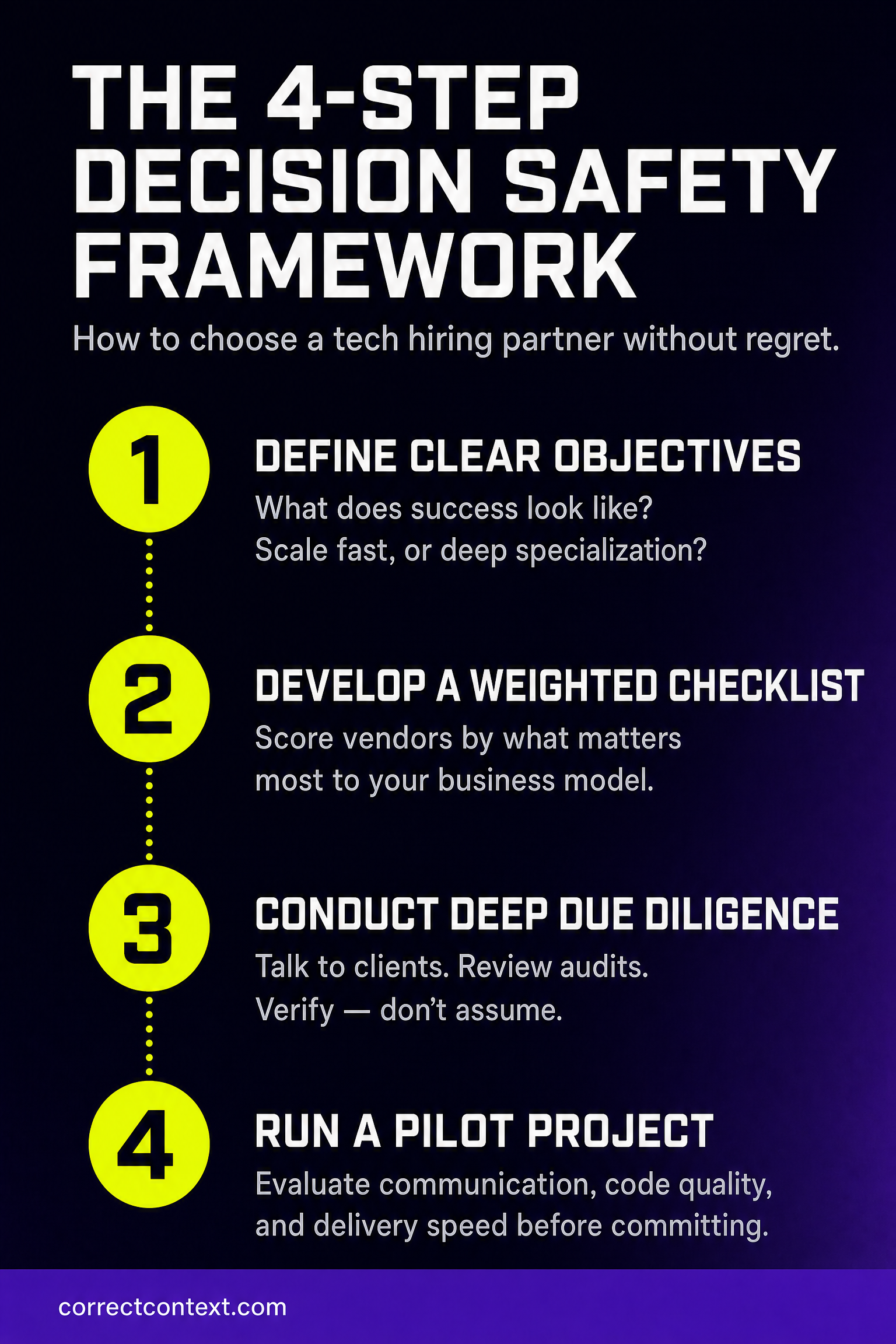
To ensure decision safety when choosing a tech hiring partner, implement a structured evaluation process. This process should move beyond superficial sales pitches and focus on verifiable evidence of capability and alignment.
- Define Clear Objectives: Before engaging any vendors, clearly articulate what you need the partner to achieve. Are you looking to scale software development rapidly, or do you need specialized expertise for an enterprise ai tools implementation?
- Develop a Weighted Checklist: Create a scorecard that weights different criteria based on your specific priorities. For a FinTech startup, security and compliance might carry the highest weight, while a media company might prioritize rapid prototyping capabilities.
- Conduct Deep Due Diligence: Do not rely solely on the vendor’s marketing materials. Speak with their current and former clients, review their technical assessments, and evaluate their financial stability.
- Start with a Pilot Project: Before committing to a long-term contract, engage the partner in a small, well-defined pilot project. This allows you to evaluate their communication, code quality, and delivery speed in a real-world scenario.
Conclusion
The decision to engage an external engineering partner is a critical inflection point for any growing technology organization. By asking the right questions and implementing a rigorous evaluation framework, CTOs and procurement leaders can mitigate risks and ensure they select a partner capable of driving their business forward.
Whether you are looking to build a dedicated software team or establish a remote development team in a new region, prioritizing architectural ownership, security, and cultural alignment will lead to a successful and enduring partnership.
References
[1] Challenges in the Vendor Selection Process – Litcom
[2] The Real Cost Of Choosing The Wrong Vendor In Banking
Table of content
Related articles



About the Author: Marta