When enterprise innovation units and globally scaling Series A+ startups expand their engineering teams, the stakes are exceptionally high. A mis-hire in a critical role — whether a machine learning engineer, a data analytics specialist, or a cloud infrastructure architect — can derail product roadmaps and incur substantial costs. One of the most persistent challenges hiring managers face is a high probation failure rate caused by poor behavioral and cultural alignment. Traditional interviews often rely on “gut feeling,” which is subjective, prone to bias, and notoriously unreliable for predicting how a candidate will perform under pressure or integrate into an existing team.
The DISC-O personality assessment framework offers a robust, data-driven solution to this problem. By integrating AI-scored scenario-based personality tests into the hiring pipeline, organizations can evaluate soft skills and cultural fit evaluation with the same rigor they apply to technical assessments. This approach transforms cultural fit from a subjective guessing game into an objective, measurable process — one that is especially critical for organizations building dedicated development teams, remote software engineers teams, or engineering hubs in Poland and CEE.
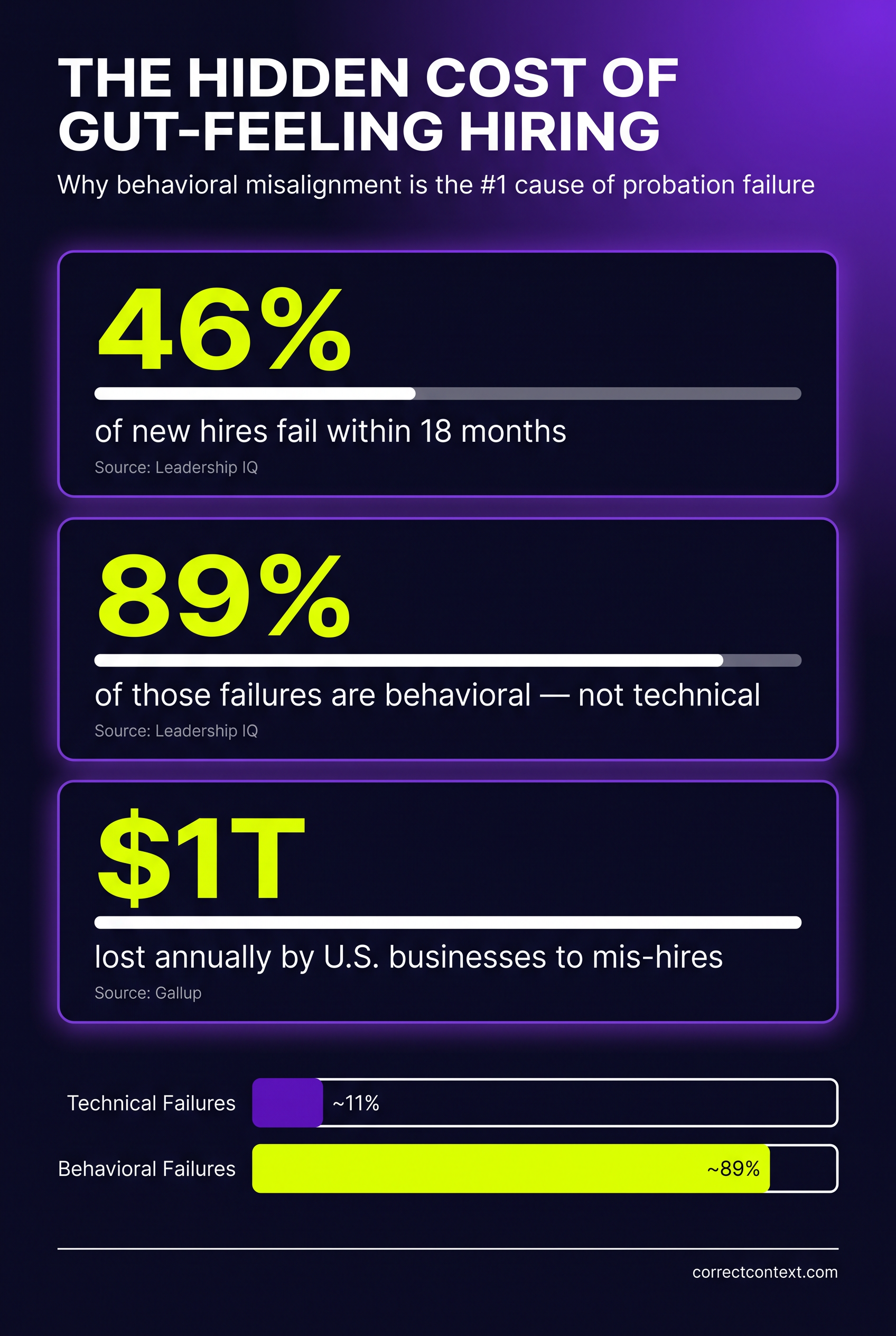
The Hidden Cost of “Gut Feeling” in Recruitment
Relying on intuition for behavioral testing in recruitment is a risky strategy. When building a dedicated software team or an extended engineering team, technical prowess alone is insufficient. Engineers must collaborate, communicate complex ideas, and navigate the inevitable friction of fast-paced tech environments. Yet most hiring processes still invest the majority of their evaluation time on technical skills, leaving cultural and behavioral alignment to the final 15 minutes of an interview.
According to research published by Leadership IQ, 46% of newly hired employees fail within 18 months — and 89% of those failures are due to attitudinal and behavioral issues rather than a lack of technical skills [1]. The financial impact is equally sobering: Gallup estimates that replacing an employee can cost anywhere from one-half to two times their annual salary, translating to a $1 trillion annual loss for U.S. businesses alone [2]. For organizations scaling a nearshore development team or building a platform engineering team across multiple geographies, these numbers compound quickly.
The traditional unstructured interview, which heavily relies on the interviewer’s gut feeling, introduces unconscious bias and often results in hiring individuals who mirror the interviewer’s own personality, rather than those who bring the complementary skills and diverse perspectives needed for a high-performing team. A more rigorous, data-backed approach is not just preferable — it is a competitive necessity.
The DISC-O Framework Explained
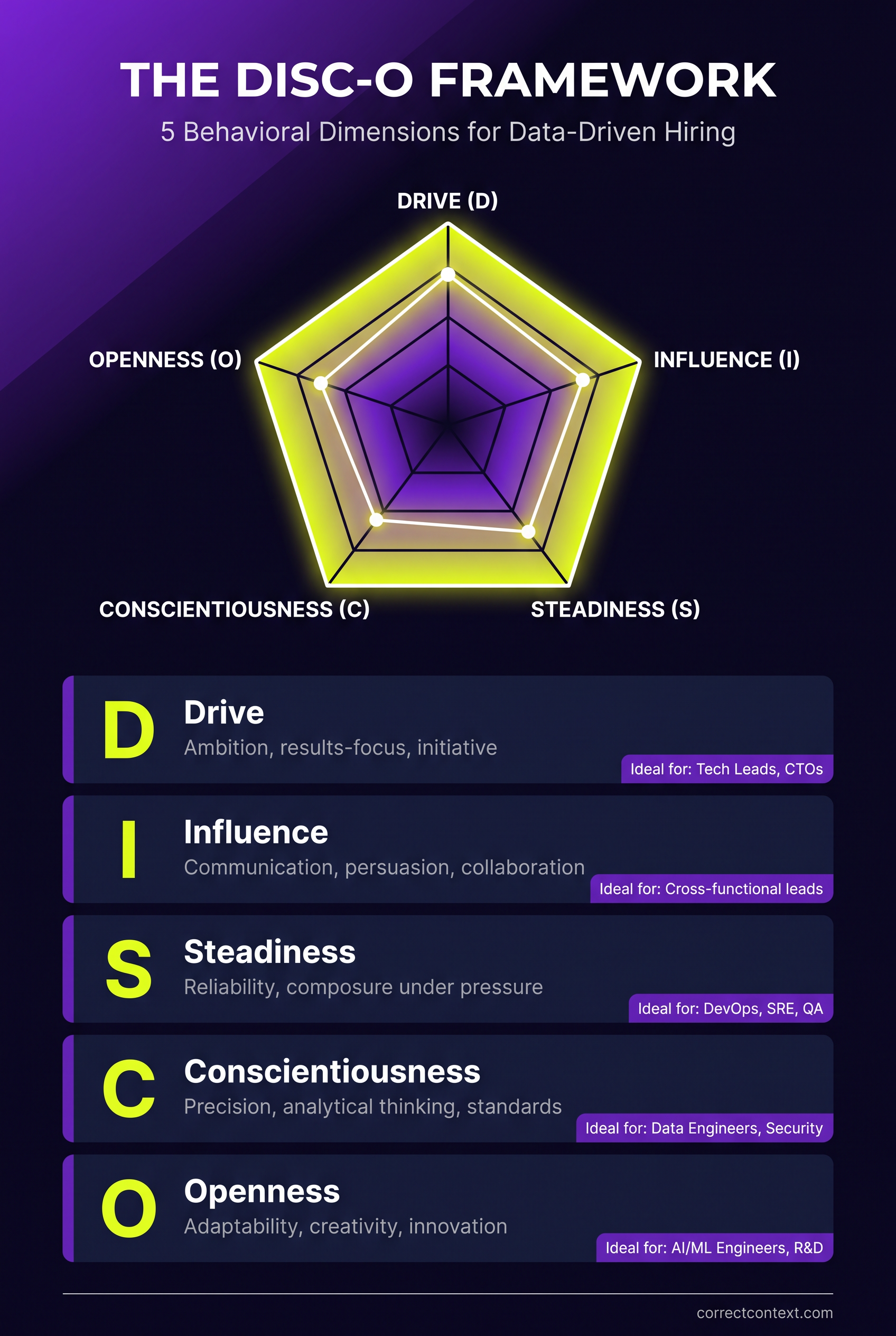
The DISC-O personality assessment is an evolution of traditional behavioral models, tailored specifically for the demands of modern, agile tech environments. It provides a structured, objective method for cultural fit evaluation by mapping candidates across five behavioral dimensions:
| Dimension | What It Measures | Ideal Roles |
|---|---|---|
| Drive (D) | Ambition, results-focus, initiative | Tech leads, product owners, startup CTOs |
| Influence (I) | Communication, persuasion, relationship-building | Cross-functional leads, developer advocates |
| Steadiness (S) | Reliability, composure under pressure, patience | DevOps engineers, SRE teams, QA leads |
| Conscientiousness (C) | Attention to detail, analytical thinking, standards adherence | Data engineers, security engineers, compliance roles |
| Openness (O) | Adaptability, creativity, embrace of new ideas | AI/ML engineers, R&D teams, innovation units |
By mapping a candidate’s behavioral profile against the specific requirements of a role and the existing team’s composition, hiring managers can make informed, data-backed decisions. Critically, the framework also helps identify where a team has behavioral gaps — for example, a data engineering team heavy on ‘C’ profiles may benefit from an ‘O’-dominant hire to drive experimentation and innovation.
AI Scored Candidate Tests: Bringing Objectivity to Soft Skills
The true power of the DISC-O framework is unlocked when combined with AI scored candidate tests. Traditional personality assessments often rely on self-reporting, which is easily manipulated by candidates providing socially desirable answers. A candidate who knows they are being evaluated for “teamwork” will almost always claim to be a team player, regardless of their actual behavioral tendencies.
AI-driven scenario-based testing immerses candidates in realistic workplace situations and evaluates their responses in real time. Natural Language Processing (NLP) and machine learning algorithms analyze not just what the candidate says, but how they say it — identifying subtle behavioral cues, response latency patterns, and linguistic markers that correlate with specific DISC-O dimensions. According to research from the Harvard Business Review, structured, data-driven assessments are twice as effective at predicting job performance compared to unstructured interviews [3].
This approach delivers several critical advantages for organizations building AI development teams, cloud engineering teams, or backend development teams:
Objectivity at Scale. AI algorithms evaluate all candidates against the same standardized criteria, eliminating human bias from the initial screening process. This is particularly valuable when assessing a large pool of candidates for a remote development team or an offshore development team where in-person evaluation is not feasible.
Higher Predictive Validity. Scenario-based tests have a demonstrably higher predictive validity for job performance than traditional interviews or self-reported questionnaires. Candidates cannot easily game a scenario that requires them to respond to a realistic workplace conflict or a time-pressured technical decision.
Pipeline Efficiency. Automated scoring allows organizations to assess a large volume of candidates quickly, accelerating the hiring pipeline without sacrificing quality. For companies looking to scale engineering teams rapidly, this efficiency is a significant operational advantage.
Actionable Data for Interviewers. Hiring managers receive detailed reports with specific behavioral insights, enabling them to conduct more focused and effective follow-up interviews. Rather than asking generic questions, interviewers can probe directly into areas where the candidate’s profile diverges from the ideal.
Integrating DISC-O into Your Hiring Pipeline
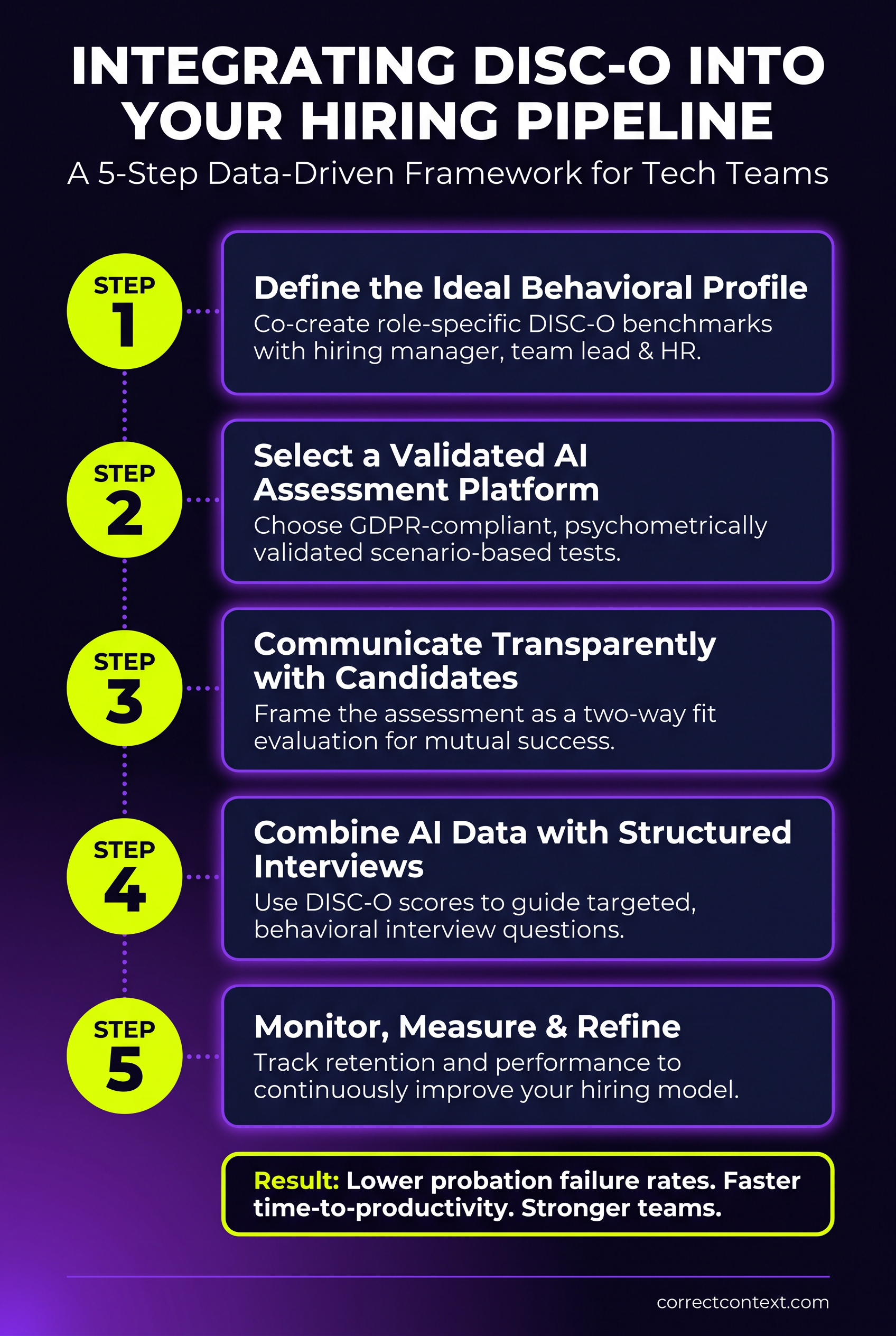
Implementing the DISC-O framework and AI scored candidate tests requires a strategic, phased approach. The following process is designed for organizations building dedicated software teams or engineering hubs in Poland and CEE:
Step 1: Define the Ideal Behavioral Profile. Before assessing candidates, clearly define the behavioral traits and cultural attributes required for success in the specific role and within the broader team context. This profile should be co-created by the hiring manager, the team lead, and an HR specialist.
Step 2: Select a Validated Assessment Platform. Choose an AI-powered assessment platform that is built on validated psychometric models and offers scenario-based tests calibrated to tech roles. Ensure the platform provides transparent scoring methodologies and complies with relevant data privacy regulations (GDPR for European hires, for example).
Step 3: Communicate Transparently with Candidates. Inform candidates about the assessment process, explaining that it is designed to ensure a mutual fit and set them up for success. Framing the assessment as a two-way evaluation — helping the candidate understand if the role and culture are right for them — significantly improves completion rates and candidate experience.
Step 4: Combine Data with Structured Human Judgment. AI-scored tests should augment, not replace, human judgment. Use the insights generated by the assessment to guide structured interviews and probe deeper into specific behavioral areas. A candidate who scores low on ‘Steadiness’ may still be the right hire for a high-velocity startup environment — the data should inform the conversation, not end it.
Step 5: Monitor, Measure, and Refine. Continuously track the performance and retention rates of hires made using the DISC-O framework. Refine your ideal profiles and assessment criteria based on real-world outcomes. Over time, this creates a proprietary dataset that makes your hiring process increasingly accurate and competitive.
Scaling Engineering Teams with Confidence
For enterprise innovation units and Series A+ startups, the ability to scale engineering teams quickly and effectively is a critical competitive advantage. Whether you are building an AI development team, a machine learning engineers team, a big data development team, or a GCP/AWS/Azure engineers team, cultural fit is just as important as technical expertise. The DISC-O framework provides the structured methodology needed to evaluate both with equal rigor.
Organizations that adopt behavioral testing in recruitment and leverage AI scored candidate tests consistently report lower probation failure rates, higher team cohesion, and faster time-to-productivity for new hires. When you are building a tech hub in Poland or scaling your software development capacity across CEE, ensuring cultural alignment from day one is the difference between a team that delivers and one that stalls.
Correct Context provides the recruitment infrastructure, EoR Poland and EoR CEE services, and deep regional expertise needed to build high-performing engineering teams in Poland and Central Eastern Europe — without requiring you to establish a local legal entity. By integrating data-driven frameworks like DISC-O into our recruitment process, we ensure that every candidate we present is not just technically qualified, but behaviorally aligned with your team’s culture and working style.
The era of hiring on gut feeling is over. The organizations that will win the talent wars of the next decade are those that bring the same data-driven discipline to human evaluation that they bring to every other part of their business.
References
[1] Leadership IQ. Why New Hires Fail (Emotional Intelligence vs. Skills).
[2] Gallup. This Fixable Problem Costs U.S. Businesses $1 Trillion
[3] Harvard Business Review. How to Take the Bias Out of Interviews